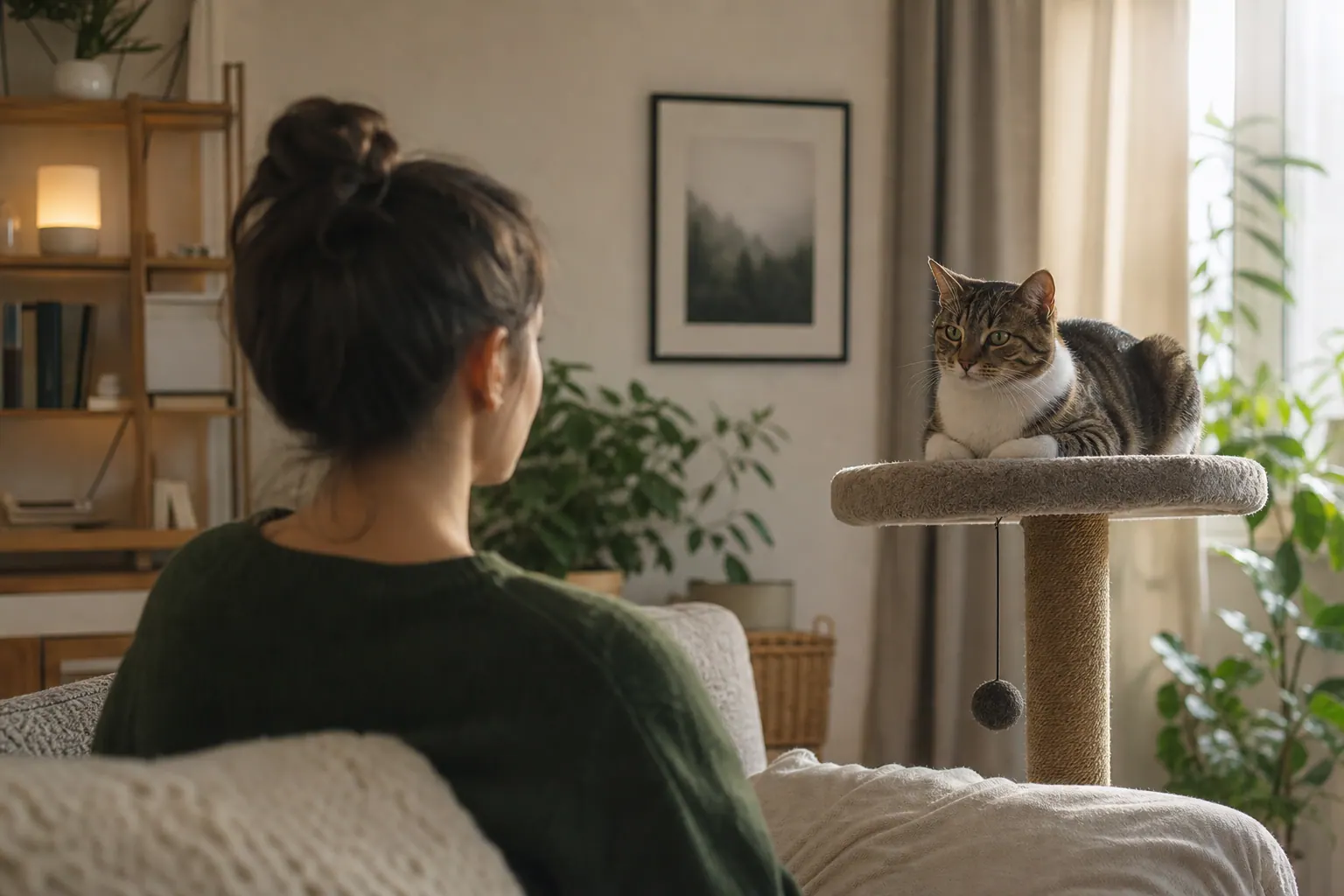
A cat body language guide helps new owners answer the question that appears every day: what is my cat trying to tell me? Cats rarely communicate with one signal alone. Tail height, ear angle, eye shape, whiskers, posture, movement, sound, and context work together. The same tail flick can mean play, irritation, focus, or conflict depending on the room, the person, and the moment. Reading the whole cat keeps handling safer and makes training more humane.
Read the whole body
Start with posture. A relaxed cat often carries the body loosely, blinks slowly, stretches, grooms, or rests in open areas. A worried cat may crouch low, tuck the paws, pull the tail tight, flatten the ears, or look for a hiding route. A highly aroused cat may stand tall with a stiff body, direct stare, raised hair, or quick tail movement. Do not treat a purr as proof of happiness. Some cats purr when seeking comfort during pain or stress.
Eyes and ears add detail. Soft eyes and slow blinks often show comfort. Wide pupils can appear during play, fear, pain, or low light. Ears facing forward can show interest. Ears turned sideways or back can show uncertainty or irritation. Whiskers pushed forward may appear during hunting play. Whiskers pulled back can appear during fear or defensive moments.
Common signals owners misread
A belly display is not always an invitation to rub. Many cats roll over when they feel safe, but the belly remains a vulnerable area. Touching it can trigger grabbing or biting. Pet the head, cheeks, or shoulders instead, and watch whether the cat leans in or moves away.
Tail movement also needs context. A high tail with a relaxed curve can be friendly. A puffed tail often signals fear or alarm. A fast thrashing tail during petting is a request to stop. A twitching tail tip during play may show focus. If the tail changes from relaxed to sharp movement, pause before the cat feels pushed.
Handling without conflict
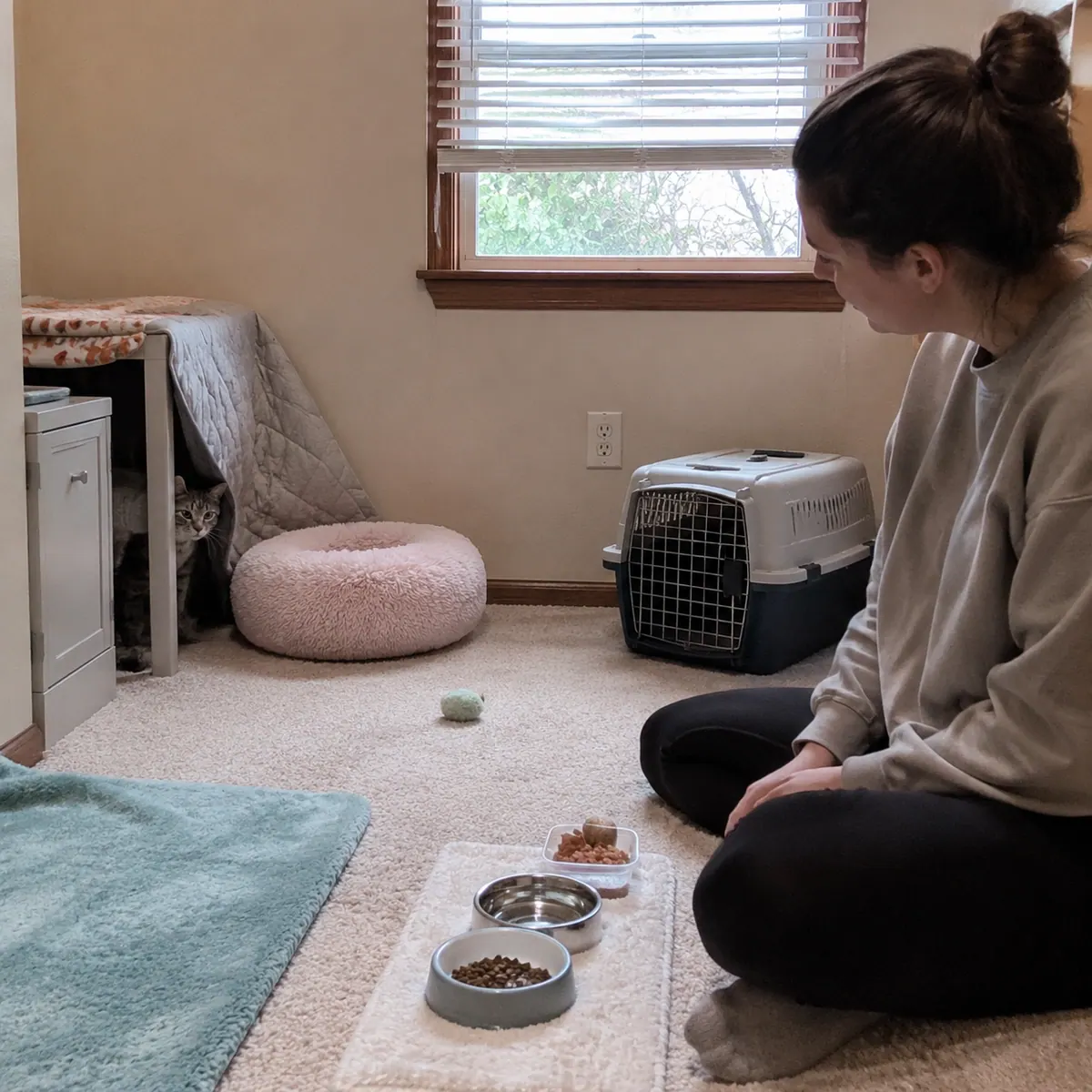
Offer choice. Let the cat approach rather than lifting it from a hiding place. Hold a hand low and still, allow a sniff, and pet briefly. Stop after a few strokes and wait. If the cat nudges, leans, or stays close, continue. If the cat turns the head away, licks lips, freezes, shifts weight, or tail flicks, give space.
Training becomes easier when body language guides timing. Reward calm approach, carrier investigation, paw handling, or quiet sitting with a small treat. End sessions before the cat leaves. Short, successful practice teaches trust faster than long sessions that push past comfort.
When behavior needs help
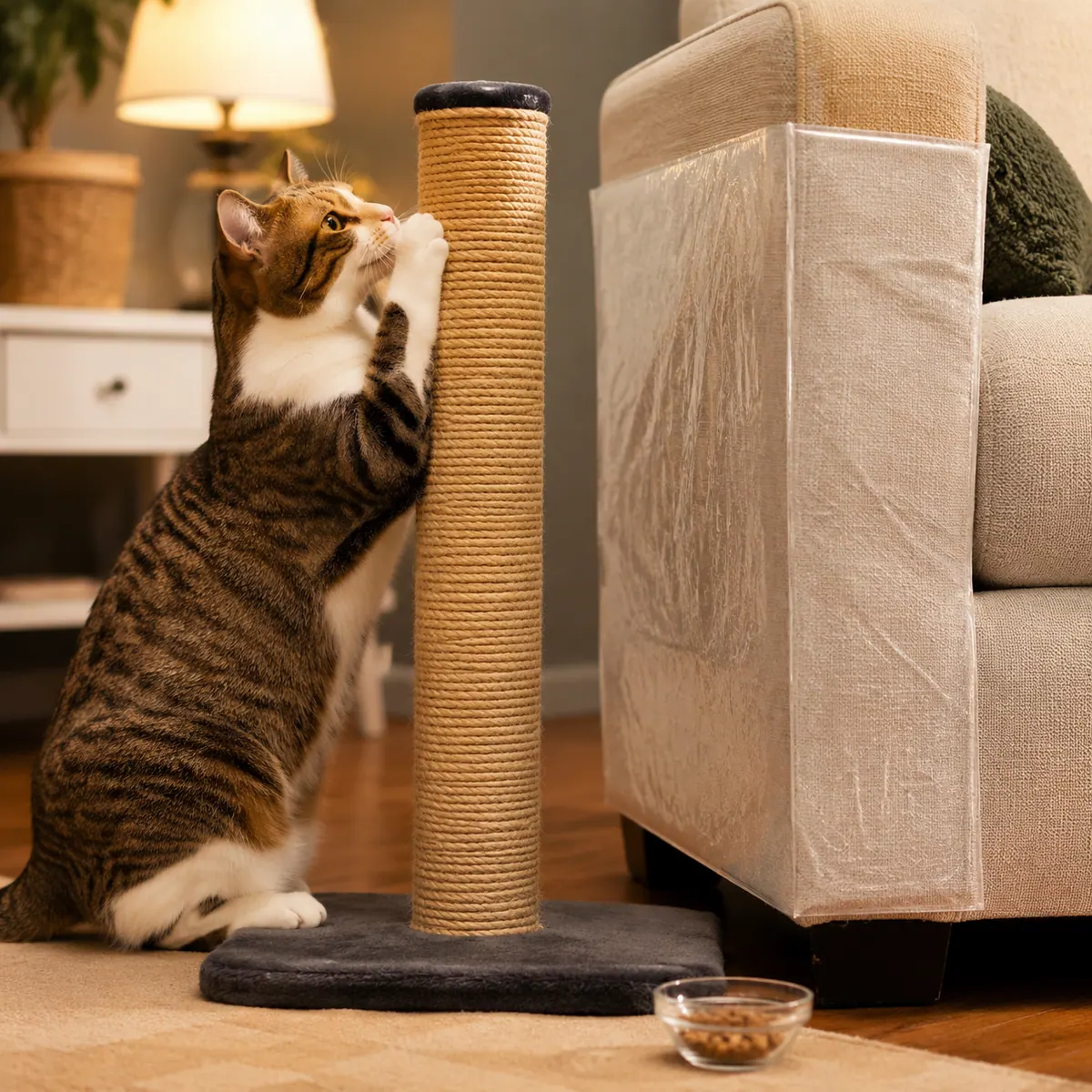
Sudden changes in hiding, aggression, vocalizing, litter habits, appetite, or grooming deserve veterinary attention. Pain, urinary disease, dental disease, arthritis, thyroid disease, and other health problems can change behavior. If health is clear, improve the environment: more vertical space, predictable feeding, clean litter boxes, scratching surfaces, play, and quiet hiding areas.
A cat body language guide is not a codebook with one meaning for every movement. It is a habit of noticing patterns. Watch what happened before the signal, what the cat did after it, and whether the same signal appears again. The more owners respect early signals, the less often cats need to bite, scratch, or hide to be understood.
Build a simple observation routine. Write down the time, location, trigger, body signals, and result for any confusing moment. A pattern may appear after a week: the cat swats only after long petting, hides only when the laundry machine starts, or vocalizes only before meals. That record turns guesswork into a plan. Reduce the trigger, teach a replacement behavior, and reward calm choices. A cat body language guide becomes most useful when owners use it daily, before frustration grows.
Practice safe response rules with the whole household. If the cat walks away, let it go. If the cat hides, leave the hiding place available. If the cat stiffens during petting, stop before teeth appear. These small choices teach the cat that people listen. A listened-to cat has fewer reasons to escalate.
The same record can guide visitors and children. If the notes show that the cat dislikes long eye contact, guests can blink softly and look away. If the cat relaxes on a perch, that perch can become the greeting place. Training starts with listening.
Sources: AAHA/AAFP https://www.aaha.org/resources/2021-aaha-aafp-feline-life-stage-guidelines/ The Spruce Pets https://www.thesprucepets.com/cat-behavior-problems-554077