Cat socialization training is not forcing a cat to be friendly. It is the careful process of pairing people, sounds, handling, carriers, and household routines with safety. Kittens often learn fastest, but adult cats can also gain confidence when exposure is slow and predictable. The goal is a cat that can recover from normal life events without panic: visitors, nail trims, vet trips, brushing, and ordinary home noise.
Start with safety
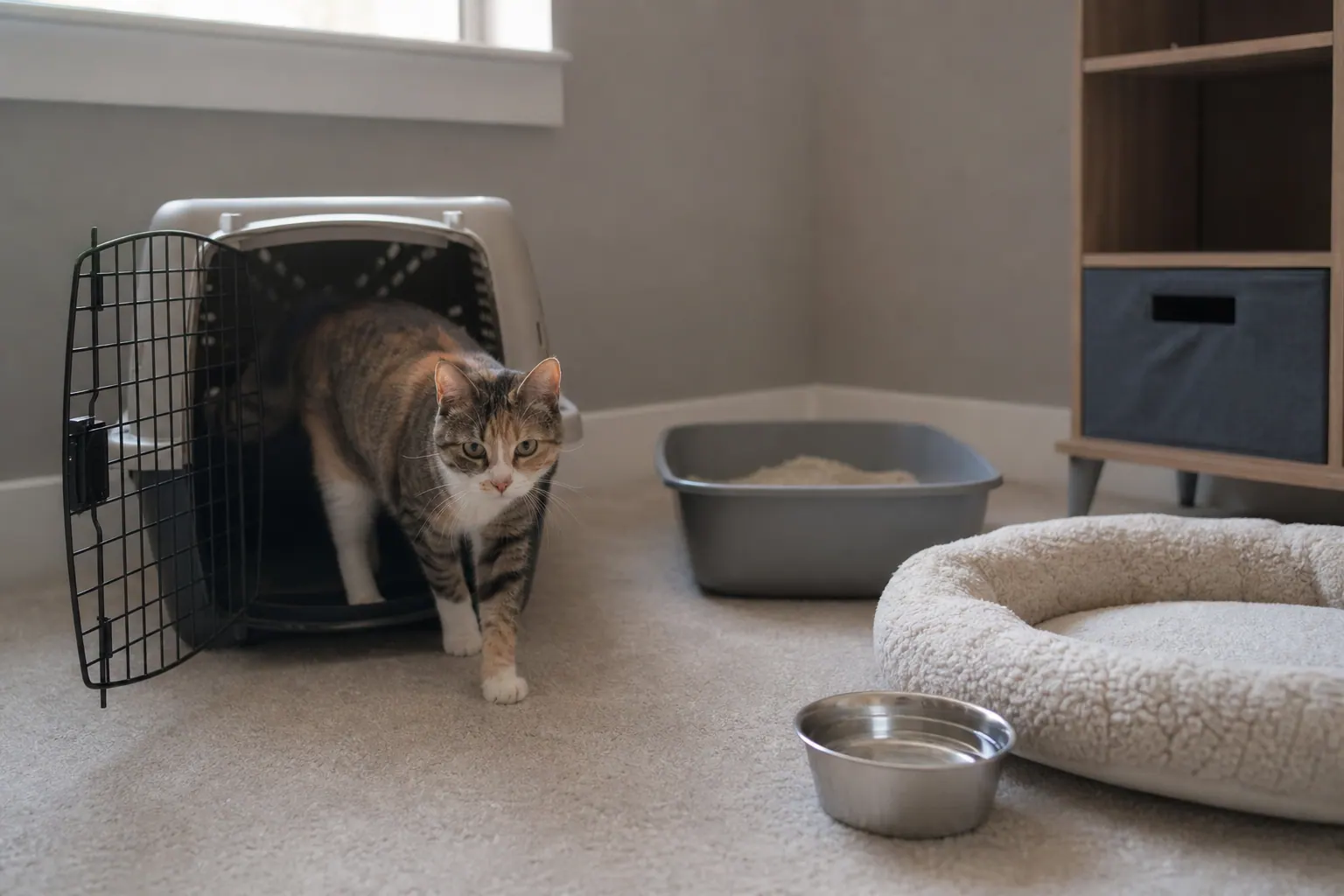
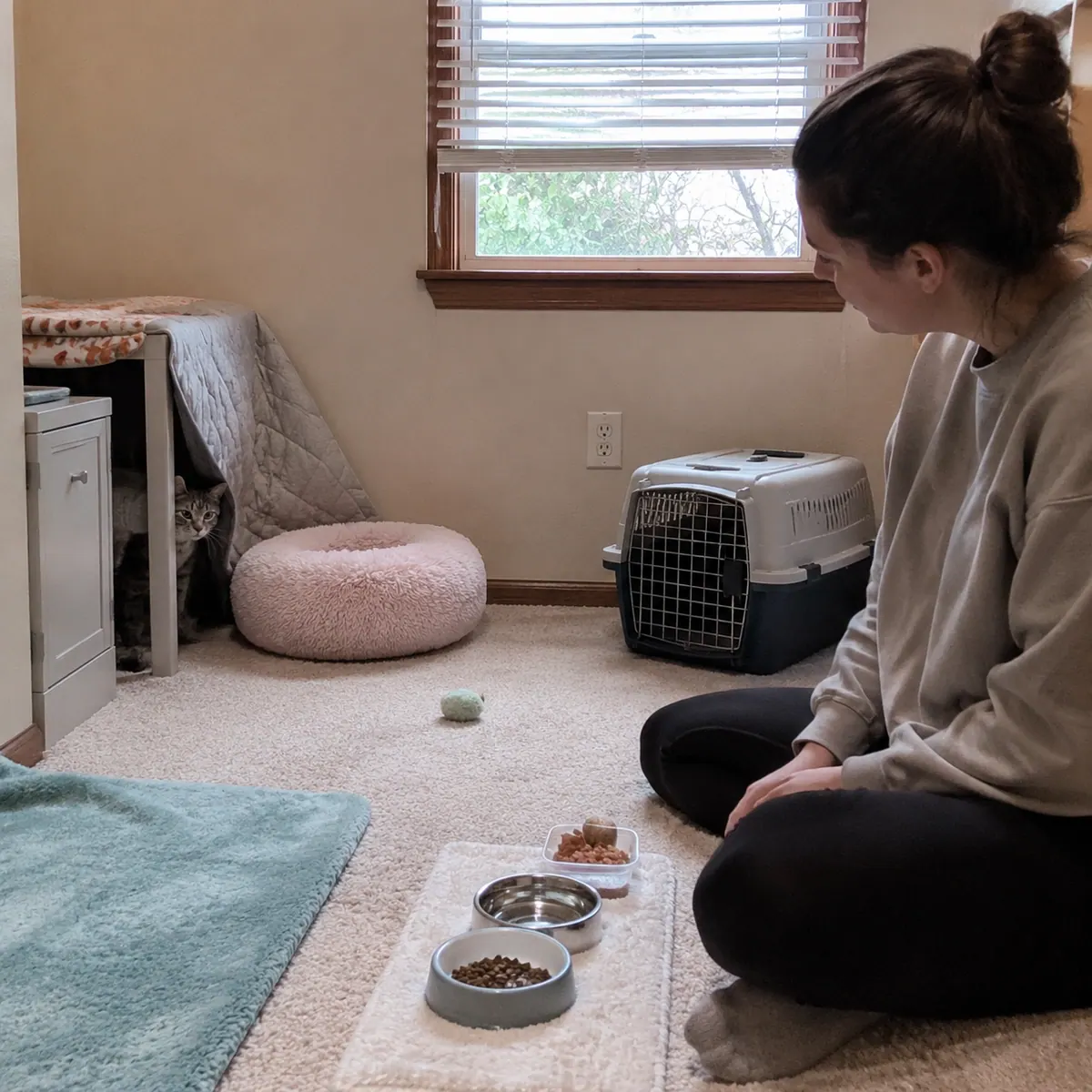
A shy cat needs a base room with food, water, litter, bedding, hiding space, scratching surface, and a few toys. Sit in the room without reaching. Read, work quietly, or place treats near you. Let the cat control distance. Trust grows when the cat can leave, hide, and return without being chased.
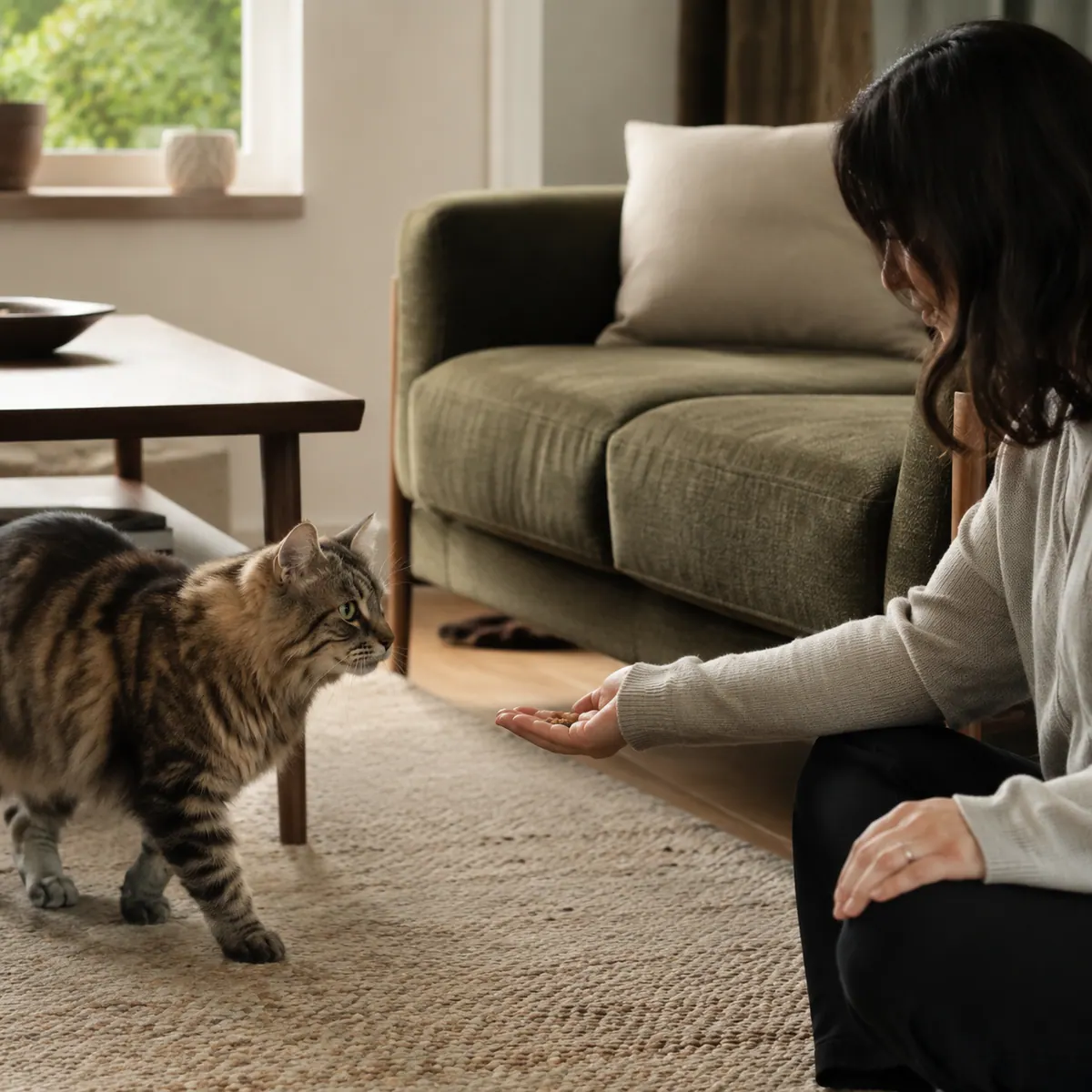
Use small rewards. A treat, lickable snack, toy toss, or gentle praise can mark progress. Reward looking at you, stepping closer, sniffing a hand, entering the carrier, or staying relaxed during a sound. End while the cat is still calm. Long sessions can turn a learning moment into pressure.
Handling skills
Teach handling in tiny pieces. Touch a shoulder, reward, and stop. Touch a paw, reward, and stop. Lift a lip, reward, and stop. Place the carrier in the room as furniture, not a surprise trap. Feed near it, place bedding inside, and reward entry. A cat that accepts the carrier has an easier path to veterinary care.
Visitors should ignore the cat at the start. Ask guests to sit, speak softly, and avoid staring. Let the cat approach. Toss treats away from the guest as well as toward the guest, giving the cat a reason to move without feeling trapped. Children need clear rules: quiet voice, no grabbing, no pulling from hiding places.
Sounds and household routines
Introduce sound at a low level. Play doorbell audio softly during meals, open a cabinet gently before play, or run a vacuum in another room while the cat has treats and an escape route. Increase intensity only when the cat remains loose and curious. If the cat hides for a long period or stops eating, the step was too large.
For kittens, variety matters. The AAHA/AAFP life stage guidelines highlight early socialization and behavior training during kittenhood. Good experiences with gentle people, carriers, grooming, surfaces, toys, and household sounds can shape adult confidence. Keep each experience positive and brief.
Help adult cats progress
Adult cats may carry memories from shelters, outdoor life, rough handling, or previous homes. Progress may look small: eating while a person sits nearby, staying on a perch during a visitor's voice, accepting one brush stroke, or walking past the carrier. Those steps count.
Avoid flooding, which means exposing the cat to more fear than it can handle. A cat that freezes is not learning comfort. A cat that can choose distance, take food, and re-engage is in a better learning zone. Cat socialization training works through repetition, not drama. Calm exposure, clear choices, and rewards can turn a hidden cat into one that participates in daily life at its own pace.
Make a weekly plan with one skill at a time. Monday may be carrier treats. Tuesday may be one paw touch. Wednesday may be hearing the doorbell at low volume. Keep sessions under five minutes and stop after a good response. If the cat refuses food, hides for a long period, or pants, return to an easier step. Socialization should leave the cat more confident after practice, not exhausted.
Household members should use the same rules. One person chasing the cat can undo careful work from another person. Place notes on doors during visitor practice, keep treats in the same location, and agree on which hiding places are off limits. Cat socialization training works best when the whole home becomes predictable.
For outdoor noises, pair the sound with distance and food rather than surprise. A cat may accept traffic sounds from a closed window before accepting an open window. Progress should look boring: ears neutral, body loose, food taken, recovery quick.
Do not measure success by whether the cat becomes outgoing. A calm cat that chooses a safe perch during visitors has made progress. A cat that accepts a nail touch without panic has made progress. Confidence is built from small choices repeated well.
Sources: AAHA/AAFP https://www.aaha.org/resources/2021-aaha-aafp-feline-life-stage-guidelines/ The Spruce Pets https://www.thesprucepets.com/aggression-between-family-cats-551794