A cat daily care routine gives the home a rhythm the cat can trust. Cats often prefer predictability: meals in familiar places, clean litter, safe resting spots, regular play, and calm human attention. A routine also helps owners notice small health changes. When appetite, water intake, litter habits, grooming, or mood shifts, the change stands out against the normal pattern.
Morning care
Start with food and water. Offer the planned portion, remove spoiled wet food, wash bowls, and refresh water. Watch how the cat approaches the meal. A cat that sniffs and walks away, chews on one side, drops food, or hides during mealtime may need attention. Cornell notes that a cat refusing food and losing weight should be examined by a veterinarian.
Scoop the litter box and look before discarding waste. Clumps that are much larger or smaller than usual, diarrhea, constipation, blood, repeated box trips, crying, or straining can signal a health problem. Keep notes if changes appear. A photo or short log can help the veterinary team understand timing.
Daytime environment
Cats need safe choices while people work, study, or leave the house. Provide a window perch, scratching surface, soft bed, hiding area, and toys that do not include loose string. Put away ribbon, thread, hair ties, small craft pieces, toxic plants, human medication, cleaners, and food scraps. Check washers, dryers, closets, and balconies before closing doors.
Food puzzles, treat balls, and rotated toys can make indoor life richer. Not every toy needs to stay out. Rotating a few items keeps interest higher and clutter lower. Cats also need sleep without interruption. A resting cat should not be pulled from a hiding place for forced attention.
Environmental comfort also includes temperature, noise, and access. Keep beds away from drafts and busy walkways. Offer vertical spaces where the cat can watch the room without being stepped over. If several cats share the home, spread resting places, boxes, water, and scratching surfaces across different rooms. Resource spacing reduces tension and gives each cat a route away from conflict.
Evening play and grooming
Use active play to imitate a hunt. Move a wand toy like prey, let the cat stalk and pounce, and close the session with a small treat or meal. This helps many cats settle at night. Avoid laser-only play unless the session ends with a physical toy the cat can catch.
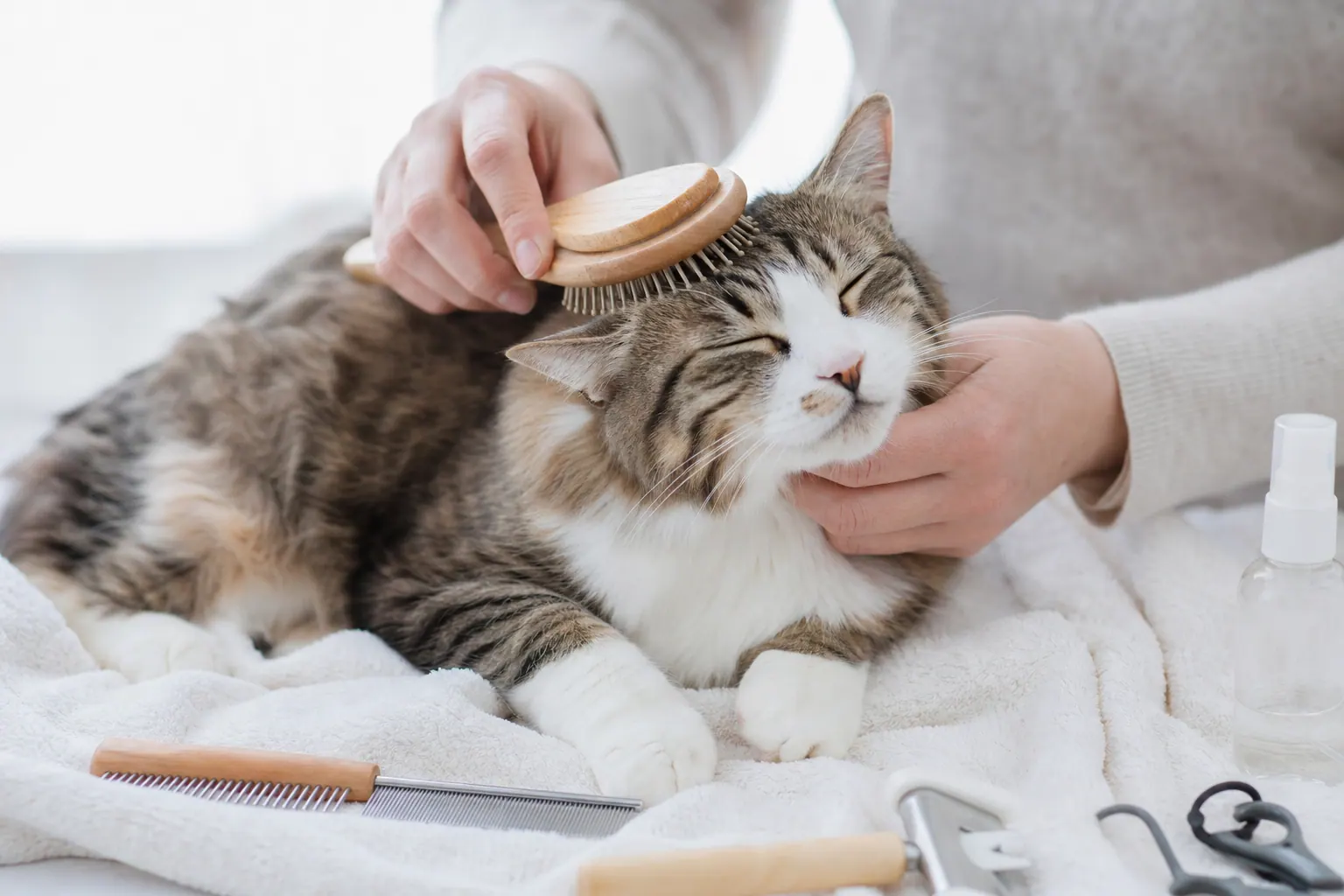
Add grooming in short pieces. Brush a few strokes, touch paws, check ears, lift the lip for a quick tooth glance, and reward cooperation. Cornell's dental guidance describes tooth brushing with cat-safe toothpaste as a preventive habit, but painful gums need veterinary advice before brushing. Grooming should feel calm enough that the cat returns willingly.
Weekly review
Once a week, weigh the cat if possible, wash bedding, clean the litter box more deeply, inspect scratching posts, and review food supply. Store dry food airtight and discard expired products. Refrigerate opened canned food. Refill parasite prevention or medication only as directed by the veterinarian.
Monthly checks can be just as useful. Look at the carrier, update the microchip contact details if anything has changed, trim loose threads from bedding, and inspect toys for damage. Review the home for new risks such as open windows, plants, cords, or dropped medication. A routine that includes safety checks protects curious cats from problems owners may not notice during busy days.
Keep emergency details easy to find. Save the regular clinic number, nearest emergency hospital, poison control contact, medication list, and current food details. Quick access matters when a cat stops eating, strains in the litter box, has trouble breathing, or seems weak.
Watch the whole cat
Good care is not only chores. It is watching the cat's body language. A relaxed cat may blink slowly, stretch, groom, play, and rest in open areas. A stressed or painful cat may hide, flatten ears, guard the belly, stop jumping, overgroom, growl, or withdraw. Senior cats may need lower litter boxes, more water stations, and easier access to warm beds.
A cat daily care routine should fit real life. Simple habits done every day are stronger than an ambitious plan that collapses. Feed with intention, clean the box, refresh water, offer play, protect sleep, and notice change. That steady care gives cats comfort and gives owners a clearer view of health.
Sources: Cornell Feline Health Center https://www.vet.cornell.edu/departments-centers-and-institutes/cornell-feline-health-center/health-information/feline-health-topics/feeding-your-cat Cornell Feline Health Center https://www.vet.cornell.edu/departments-centers-and-institutes/cornell-feline-health-center/health-information/feline-health-topics/feline-dental-disease Cornell Feline Health Center https://www.vet.cornell.edu/departments-centers-and-institutes/cornell-feline-health-center/health-information/feline-health-topics/loving-care-older-cats