A cat feeding guide should begin with biology. Cats are obligate carnivores, which means their bodies rely on nutrients found in animal-source foods. Good feeding does not need to be complicated, but it does need structure: a complete diet, clean water, measured portions, safe treats, and a plan for weight changes. The right routine protects energy, digestion, coat quality, and long-term health.
Choose complete food
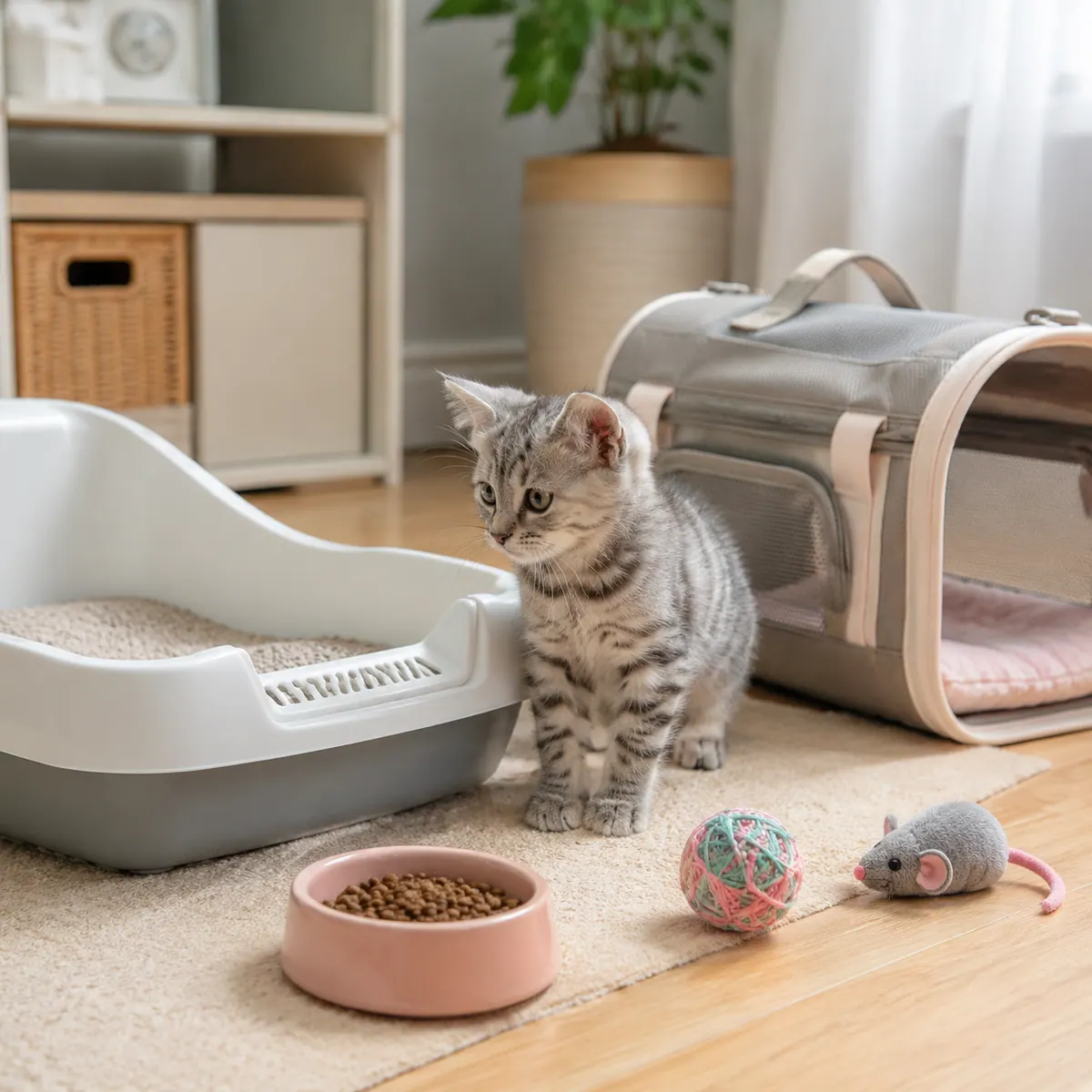
Look for food labeled complete and balanced for the cat's life stage. Kittens need growth nutrition. Adult cats need maintenance nutrition. Pregnant or nursing cats need a diet labeled for those needs. Cornell Feline Health Center notes that nutritional needs change through kittenhood, adulthood, pregnancy, and lactation. A food labeled for all life stages may work in some homes, but it can be too calorie dense for certain adults. Your veterinarian can help match the label to the cat.
Read the package rather than relying on front-label marketing. Meat, meat byproducts, or seafood near the top of the ingredient list can indicate animal-source ingredients that provide needed amino acids and fatty acids. AAFCO nutritional adequacy wording is also useful, since it signals that the diet is intended to meet recognized standards for a life stage.
Wet food, dry food, and water
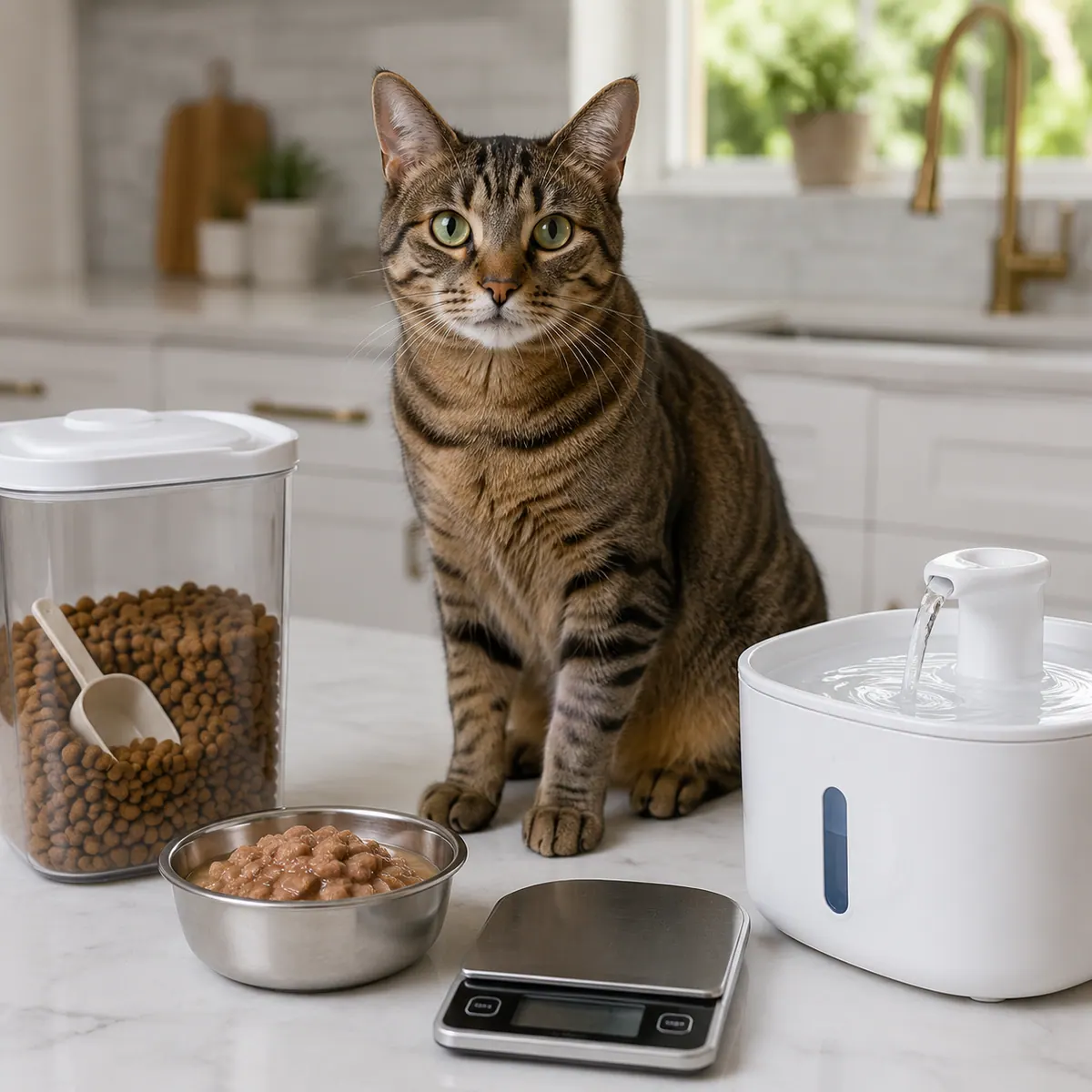
Wet food has high water content and can support hydration. Dry food is convenient, stores well when sealed, and may fit some budgets. Many cats do well with a mix. Store dry food in a cool, dry place, close the bag or container tightly, and check expiration dates. Refrigerate opened canned food.
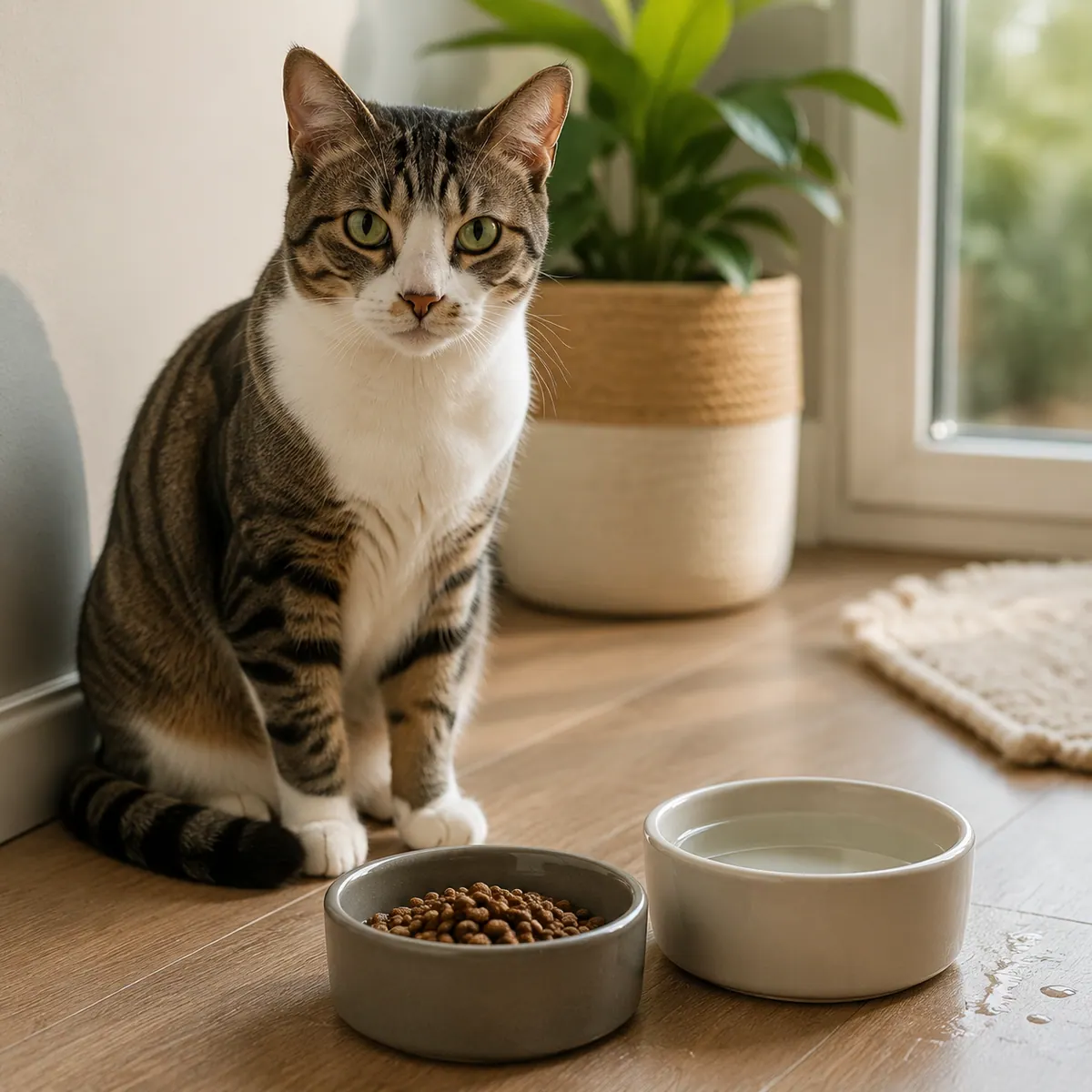
Fresh water should be available at all times. Cornell's hydration guidance says cats need about four ounces of water per five pounds of lean body weight per day, with wet food contributing water. A cat eating mostly dry food may drink more from bowls. Place water in more than one quiet location. Wide bowls and fountains can help cats that dislike whisker contact or still water.
Water intake should be watched as a pattern. A sudden rise in drinking or urination may signal kidney disease, diabetes, thyroid disease, or another medical concern. A sudden drop in intake may appear with nausea, pain, or stress. Clean bowls daily and place them away from litter boxes. Some cats drink better when water stations are separated from food, since many cats prefer clear resource zones.
Portions and body condition
Measure meals. Guessing portions can slowly push a cat above or below a healthy weight. Body condition matters as much as the number on the scale. Ribs should be easy to feel under a light covering, and the body should have shape rather than a round tube. Cornell notes that obesity is a common nutrition-related problem in cats and can increase risk for arthritis and diabetes.
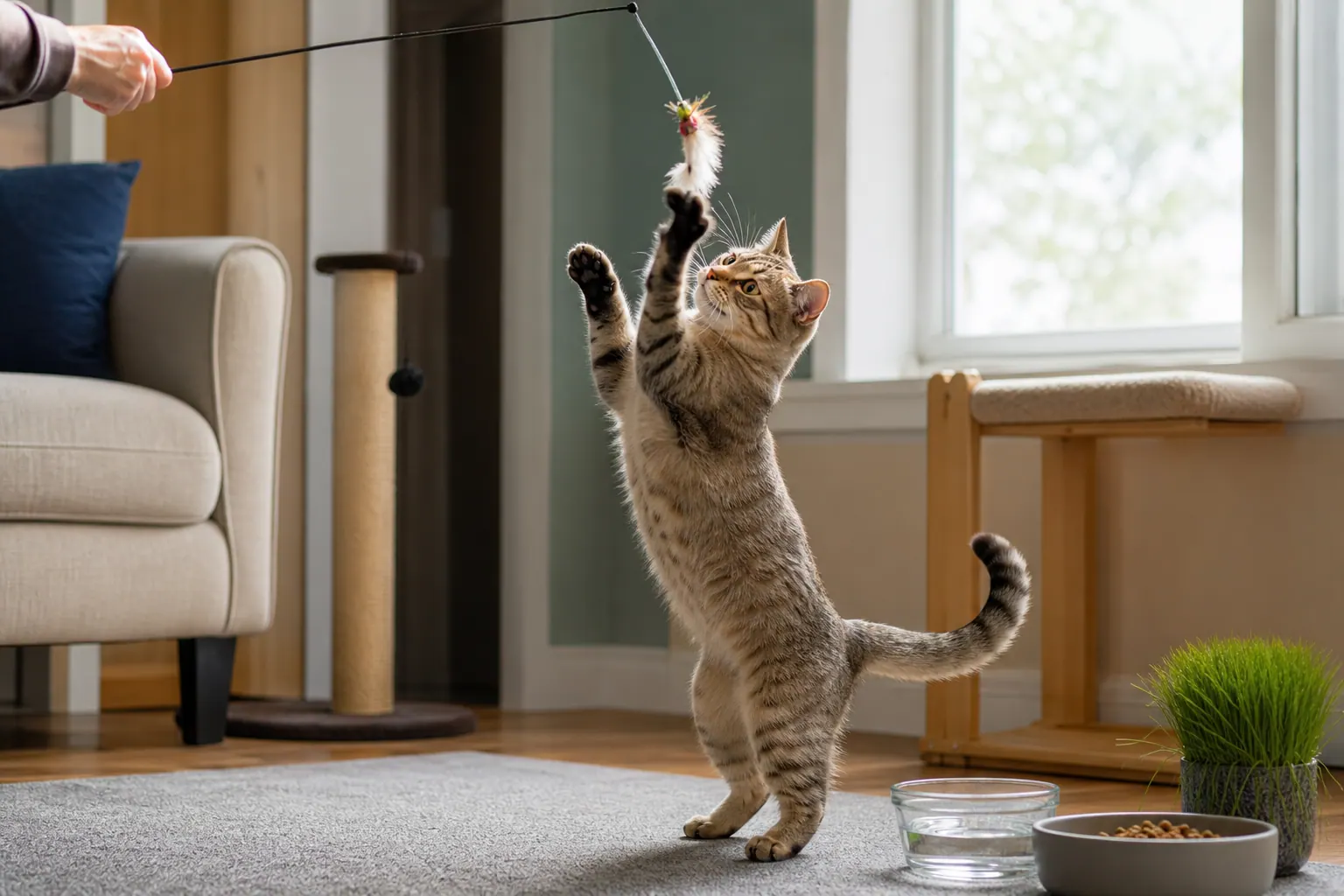
Meal timing can be flexible. Some cats do well with scheduled meals. Some graze safely when portions are controlled. Puzzle feeders can slow fast eaters and add mental activity. Multi-cat homes may need separate feeding stations to stop one cat from stealing food while another loses weight.
Treats and unsafe foods
Treats should stay limited. Cornell suggests treats should not exceed 10 to 15 percent of daily calories. That upper range can still be too much for small cats, which makes tiny portions wise. Avoid raw meat as food or treats due to infection risk. Milk is not a good routine treat, as many cats are lactose intolerant and may develop stomach upset. Human foods with onion, garlic, alcohol, caffeine, chocolate, or xylitol should stay away from cats.
Diet changes should be gradual unless a veterinarian gives different instructions. Mix a small amount of the new food into the current food and increase the new portion across several days. Watch stool, appetite, vomiting, itching, and energy. A cat that develops diarrhea or refuses meals may need a slower transition or a different diet. Prescription diets should be used only under veterinary guidance, since they are designed for specific medical needs.
When eating changes
A cat that refuses food can become seriously ill. Call a veterinarian if appetite drops, weight falls, vomiting continues, thirst changes, or the cat seems weak. The best cat feeding guide is not a single menu. It is a steady habit of matching food to life stage, watching body condition, keeping water available, and responding quickly when normal eating changes.
Keep feeding records simple. Write down the brand, flavor, daily amount, treat count, and weight trend. This helps during vet visits and prevents accidental overfeeding when several people share care. The most useful cat feeding guide is one the household can follow every day.
Sources: Cornell Feline Health Center https://www.vet.cornell.edu/departments-centers-and-institutes/cornell-feline-health-center/health-information/feline-health-topics/feeding-your-cat Cornell Feline Health Center https://www.vet.cornell.edu/departments-centers-and-institutes/cornell-feline-health-center/health-information/feline-health-topics/hydration