Daily cat cleaning care is less about bathing and more about small habits that keep skin, teeth, paws, ears, eyes, and litter areas comfortable. Most healthy cats groom themselves, but home care still matters. Brushing catches loose hair, nail trims protect furniture and skin, tooth care supports eating comfort, and a clean litter box gives an early signal when health changes.
Coat and skin checks
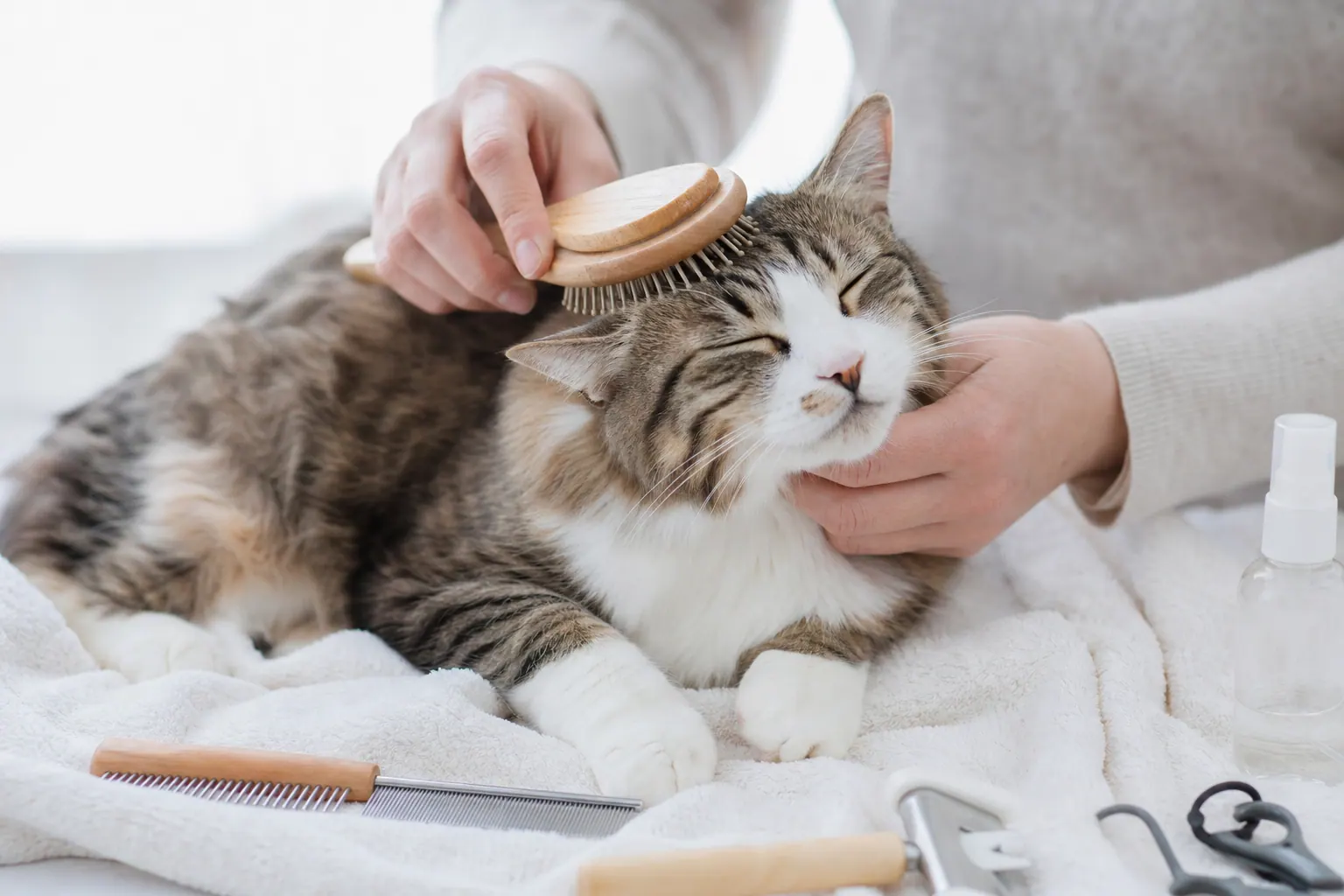
Brush the coat in short sessions. Long-haired cats may need daily brushing to prevent mats. Short-haired cats may need several sessions each week, with more brushing during shedding periods. Use a tool that suits the coat and stop before the cat gets irritated. Small rewards after brushing help the routine feel safe.
While brushing, look for dandruff, bald areas, fleas, scabs, lumps, painful spots, and mats near the hips or belly. Cats that stop grooming one area may have pain, obesity, dental trouble, or illness. Cats that groom one area too much may have skin disease, parasites, stress, or pain. A gentle coat check can catch these changes early.
Bathing is rarely needed for a healthy cat. A bath may be useful after contact with a harmful substance, severe stool mess, or a veterinary recommendation, but routine bathing can dry skin and create fear. Use a damp cloth for small messes and ask a veterinarian or groomer for help with tight mats. Cutting mats at home can injure skin, since feline skin can be thin and hidden under the coat.
Nails, paws, eyes, and ears
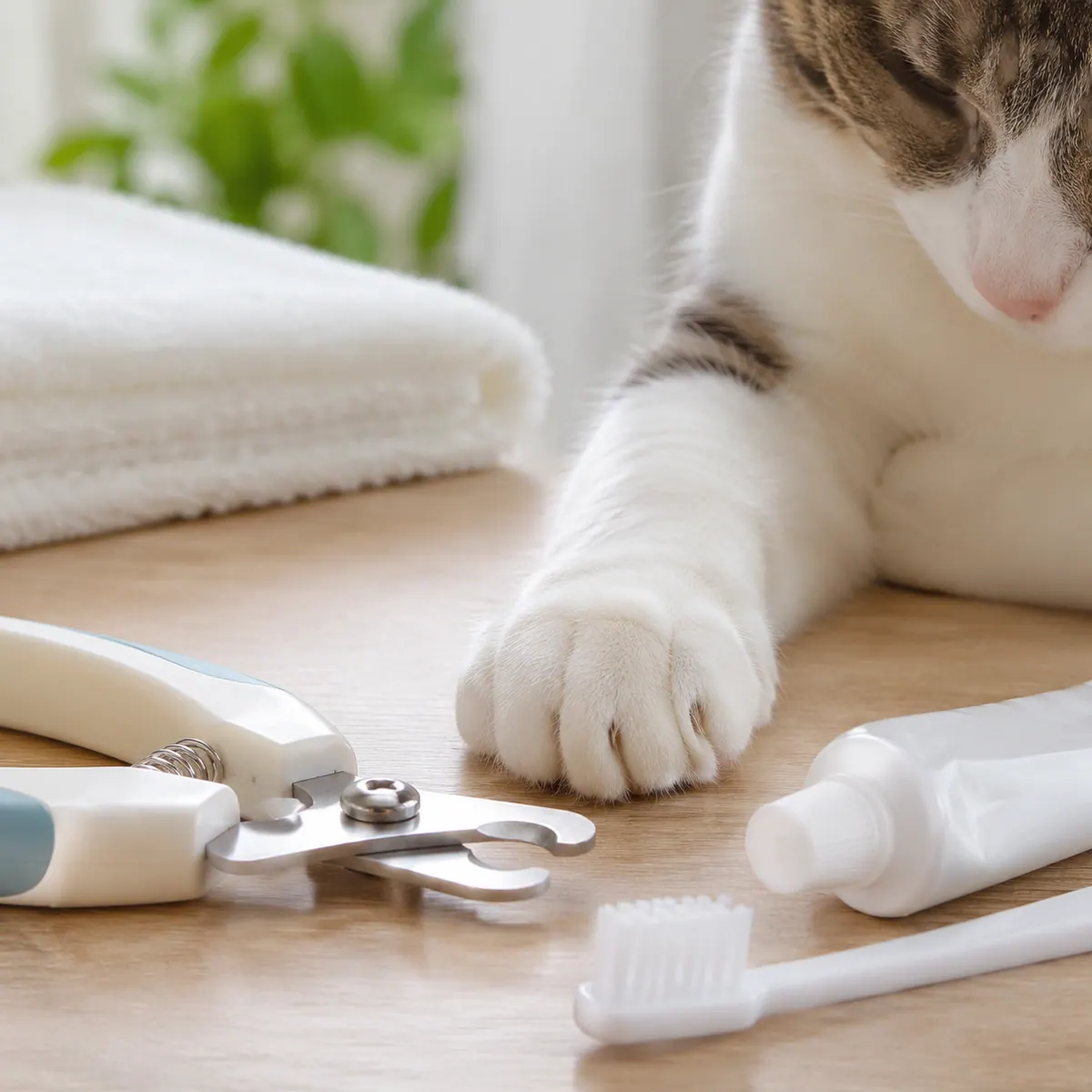
Trim nails when the tips become sharp or curved. Press the toe gently to extend the claw, clip only the clear tip, and avoid the pink quick. If the cat resists, trim one or two nails per session. Pair each trim with food or play. Scratching posts should stay available even when nails are trimmed, since scratching stretches muscles and leaves scent marks.
Check paws for litter clumps, swelling, cuts, or debris. Wipe eyes with a damp soft cloth only when mild crust appears. Do not use medicated drops unless a veterinarian directs it. Ears should look clean and should not smell bad. Redness, dark debris, head shaking, or scratching at the ear calls for veterinary advice.
Dental care at home
Teeth are a core part of daily cat cleaning care. Cornell Feline Health Center reports that many cats older than four years have some form of dental disease. Signs can include bad breath, drooling, red gums, turning the head while chewing, dropping food, preferring soft food, or refusing meals. Mouth pain can be quiet, which makes close attention to eating behavior valuable.
Use toothpaste made for cats. Human toothpaste is not safe for cats. Start by letting the cat smell and taste the paste. Touch a canine tooth with a small amount during a later session, and introduce a soft brush after the cat accepts that contact. The goal is calm acceptance, not a battle. If gums are red, bleeding, or painful, ask a veterinarian before brushing.
Litter hygiene and household cleaning
Scoop the litter box every day. Wash boxes regularly with mild unscented soap and water. Avoid strong cleaners that leave heavy scent. Place the box in a quiet, reachable area, away from food and water. In multi-cat homes, provide several boxes in different locations to prevent one cat from blocking access.
Clean food and water bowls daily. Wash fountains as directed by the maker, including filters and hidden parts. Store dry food in an airtight container and check expiration dates. Refrigerate opened canned food and discard old portions. Cornell notes that opened canned food should be refrigerated to maintain quality and reduce spoilage.
Low-stress handling
A calm cleaning routine grows from consent and repetition. Touch a paw, reward, and stop. Lift a lip, reward, and stop. Brush a few strokes, reward, and stop. These tiny sessions teach the cat that care ends quickly and does not remove control. Daily cat cleaning care works best when it feels ordinary, predictable, and kind.
Keep a small care kit in one place: brush, nail clippers, cat toothpaste, soft cloths, and treats. Check tools monthly and replace dull clippers or dirty brushes. A prepared kit shortens each session and reduces stress for the cat. Daily cat cleaning care should protect comfort, not create a struggle. If a task always causes fear or aggression, pause and ask a veterinary team for a gentler plan.
Sources: Cornell Feline Health Center https://www.vet.cornell.edu/departments-centers-and-institutes/cornell-feline-health-center/health-information/feline-health-topics/feline-dental-disease Cornell Feline Health Center https://www.vet.cornell.edu/departments-centers-and-institutes/cornell-feline-health-center/health-information/feline-health-topics/feeding-your-cat