Family and apartment cat breeds should be chosen by lifestyle, not ranking lists. A small apartment can be perfect for a calm adult cat with vertical space. A busy family can be perfect for a social breed if children learn gentle handling. Ragdoll, Birman, British Shorthair, Exotic Shorthair, Scottish Fold, Russian Blue, American Curl, Manx, and domestic mixed-breed cats can all fit the right home.
Gentle family matches
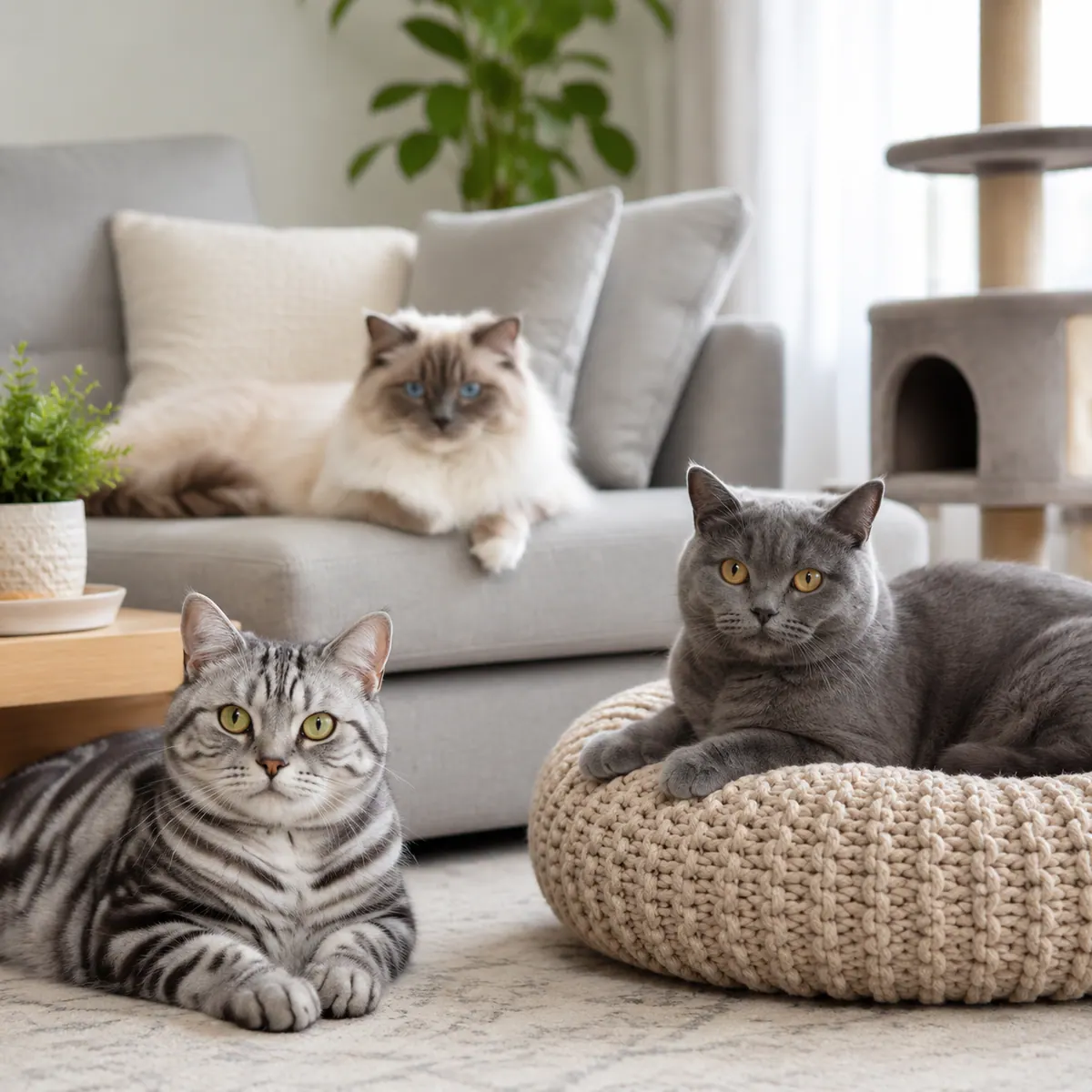
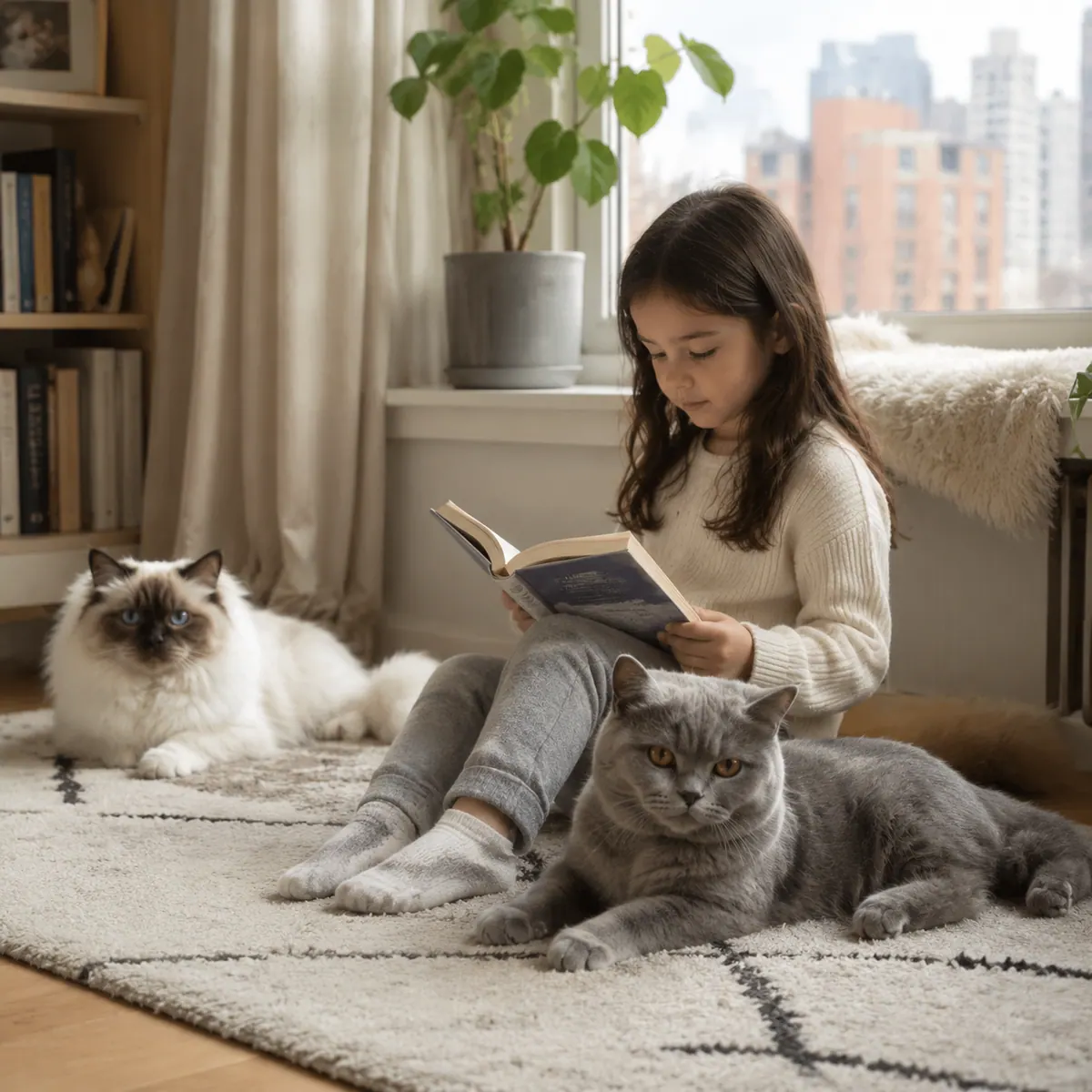
Ragdolls and Birmans often appeal to families since they tend to be affectionate and people-focused. They still need respectful handling. Children should learn to pet the head and shoulders, avoid pulling tails, and let the cat leave. A large gentle cat is not a stuffed toy.
Maine Coons can also fit families with space for their size and energy. They may enjoy interactive play and social time. Their grooming and health screening needs should be part of the decision. American Shorthairs are steady cats for many homes, with short coats and balanced temperaments.
Quiet apartment choices
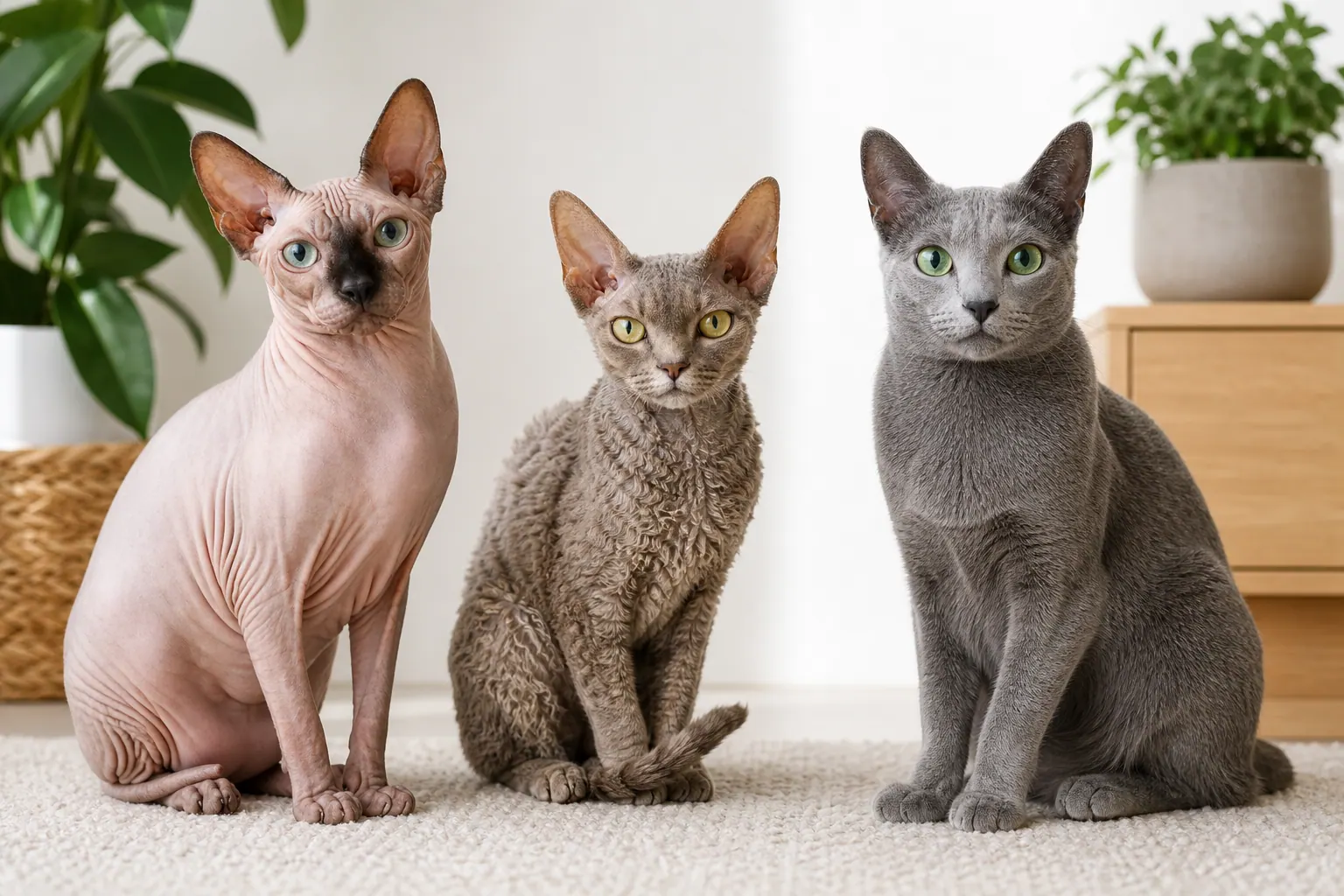
British Shorthairs, Russian Blues, and Exotic Shorthairs may fit apartment owners who want a calmer cat. British Shorthairs are plush, sturdy, and often less intense than vocal breeds. Russian Blues can be reserved and routine-loving. Exotic Shorthairs offer a Persian-like look with a shorter coat, though flat-faced lines still need careful health questions.
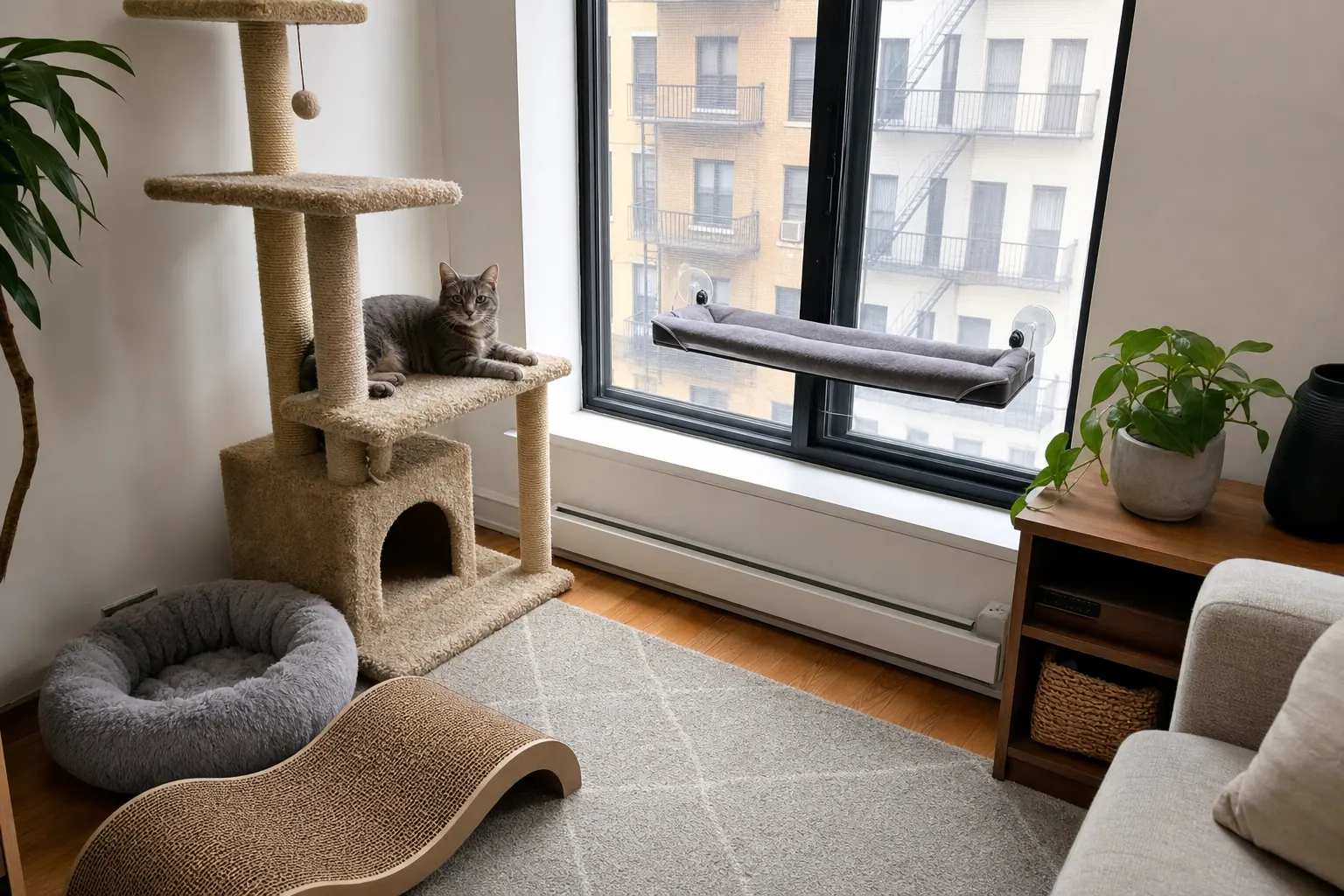
Apartments need vertical design. Add a window perch, cat tree, scratchers, hiding spots, and predictable play. A quiet breed can still become stressed if resources are crowded or the litter box is poorly placed.
Special health cautions
Scottish Folds are popular for folded ears, but the cartilage mutation linked to the ear shape raises welfare concerns. Prospective owners should ask veterinarians about joint and mobility risks before choosing the breed. Manx cats are known for short tails or no tail, and owners should ask about spine and mobility screening.
Flat-faced breeds, including Persians and some Exotics, may need eye cleaning and dental attention. Large breeds may need heart screening. Any breed can develop dental disease, obesity, kidney disease, or heart disease, which makes routine veterinary care more important than breed reputation.
Choose by daily reality
A family and apartment cat breeds guide should include the mixed-breed cat at the shelter. Adult cats often come with known personalities. Staff may know whether the cat likes children, avoids dogs, uses the litter box well, or prefers quiet. That information can be more useful than breed predictions.
Pick the cat whose needs match your week: grooming time, noise tolerance, play energy, travel plans, budget, and health care. Breed can narrow the search, but daily care builds the relationship. The best family and apartment cat breeds are the cats that can live safely, comfortably, and respectfully with the people in front of them.
Apartment owners should ask about noise. Siamese and Oriental-type cats can be loving but very vocal. A British Shorthair or older mixed-breed cat may be quieter, though individual personality always matters. A lease may also limit pets, numbers, or balcony access. The home should be safe before adoption, not adjusted after a close call.
Families should match the cat to the youngest child, not the most careful adult. A tolerant adult cat with a shelter history around children may be a safer fit than a fragile kitten or a shy breed that dislikes sudden movement. Teach children to invite the cat with a toy, not grab it. The best family and apartment cat breeds are protected by rules that make daily life fair.
Noise, visitors, and routine changes should be part of the match. Some cats enjoy a busy home. Others need predictable quiet. Ask whether the cat has lived with dogs, toddlers, or other cats. For apartments, ask whether the cat scratches posts, uses covered boxes, and tolerates hallway sounds.
A trial foster period can be valuable when available. It shows how the cat handles elevators, neighbors, children, work calls, and bedtime routines. Real home behavior is often more useful than a breed description alone.
Plan the home before the cat arrives. Put scratchers near seating, keep one quiet retreat open, and place the litter box where the cat can reach it without crossing busy paths. Good layout can make a small apartment feel much larger to a cat.
Sources: CFA https://cfa.org/breeds/ AAHA/AAFP https://www.aaha.org/resources/2021-aaha-aafp-feline-life-stage-guidelines/