Fun cat enrichment ideas can turn an ordinary indoor day into a healthier routine. Enrichment gives cats safe ways to stalk, chase, climb, scratch, sniff, solve, rest, and choose. It also gives owners more enjoyable moments with the cat. The best ideas do not need expensive products. They need safety, variety, and attention to what the cat actually likes.
Food and scent games
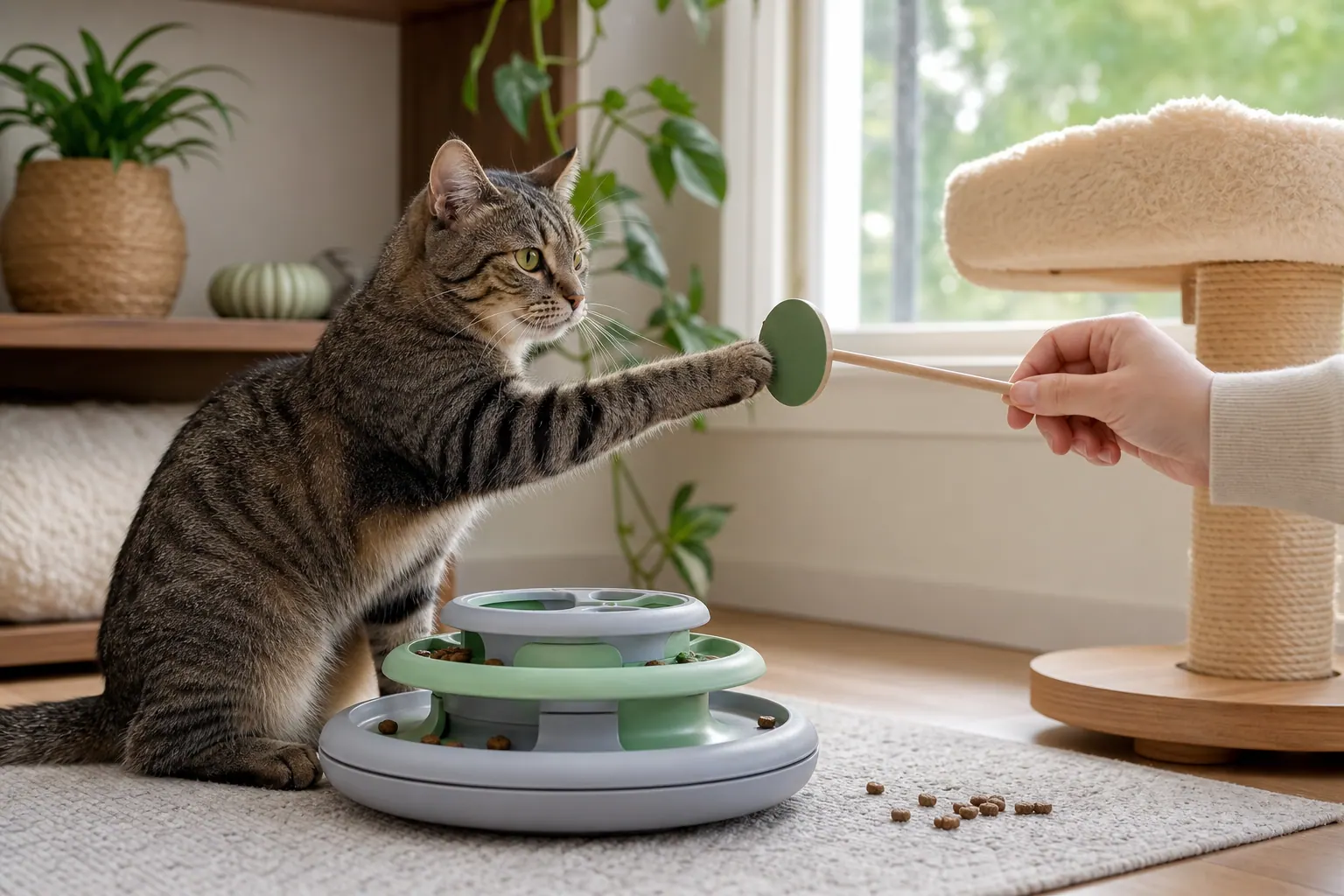
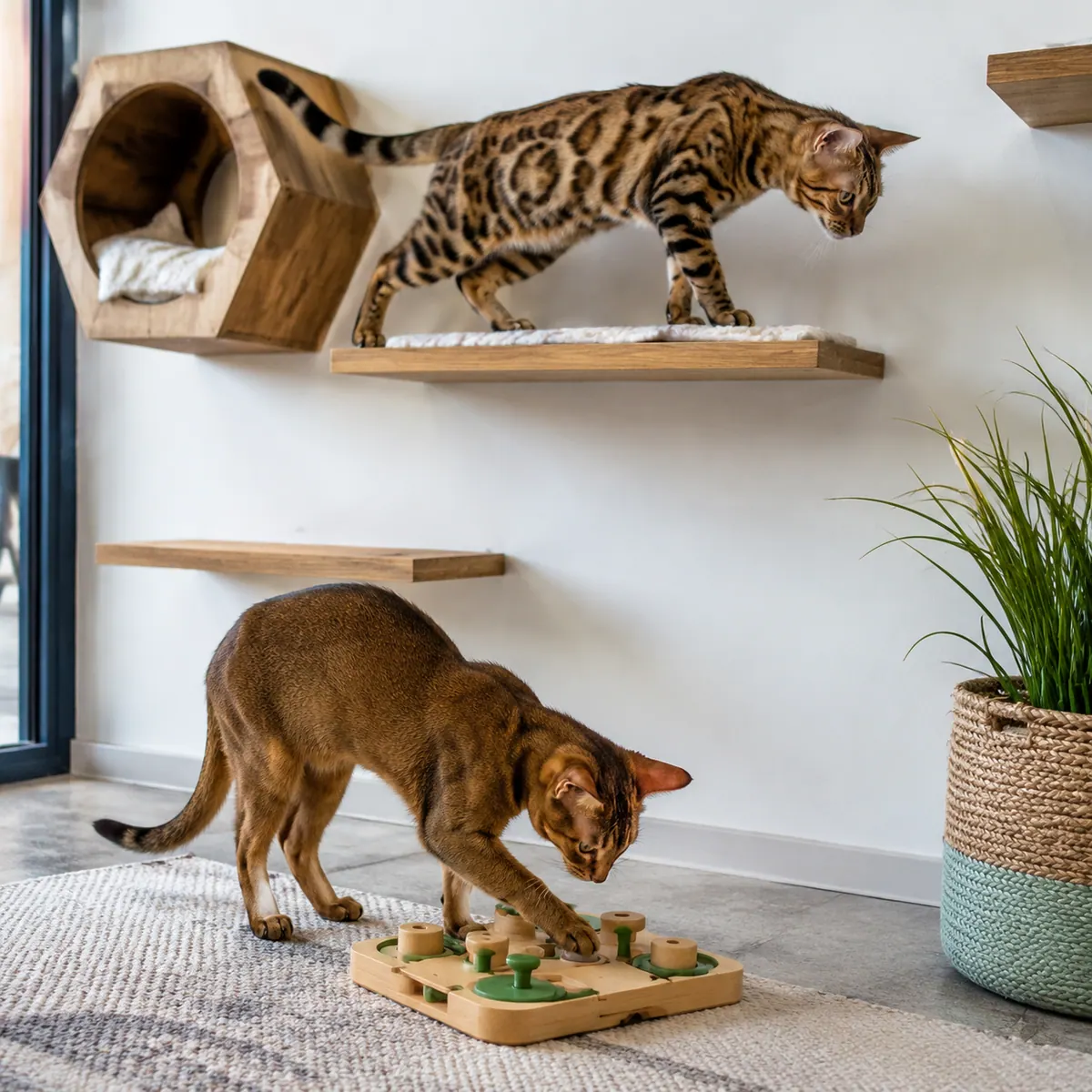
Start with meals. Put a small portion of dry food in a puzzle feeder, scatter treats across a towel, or hide a few pieces in cardboard cups. Food search games slow fast eaters and give the cat a job. Use only part of the daily portion to avoid weight gain.
Scent games can be simple. Place a clean cardboard box in the room. Add a blanket from another room, a silver vine toy, or catnip if the cat enjoys it. Not every cat reacts to catnip, and some become too excited. Watch the body language and remove the item if play becomes frantic.
Climbing and scratching
Vertical space makes a room feel larger. A window perch, cat tree, sturdy shelf, or safe furniture route lets the cat observe without being stepped over. Scratching posts should be stable and placed where the cat already spends time. Try vertical and horizontal scratchers to learn the preference.
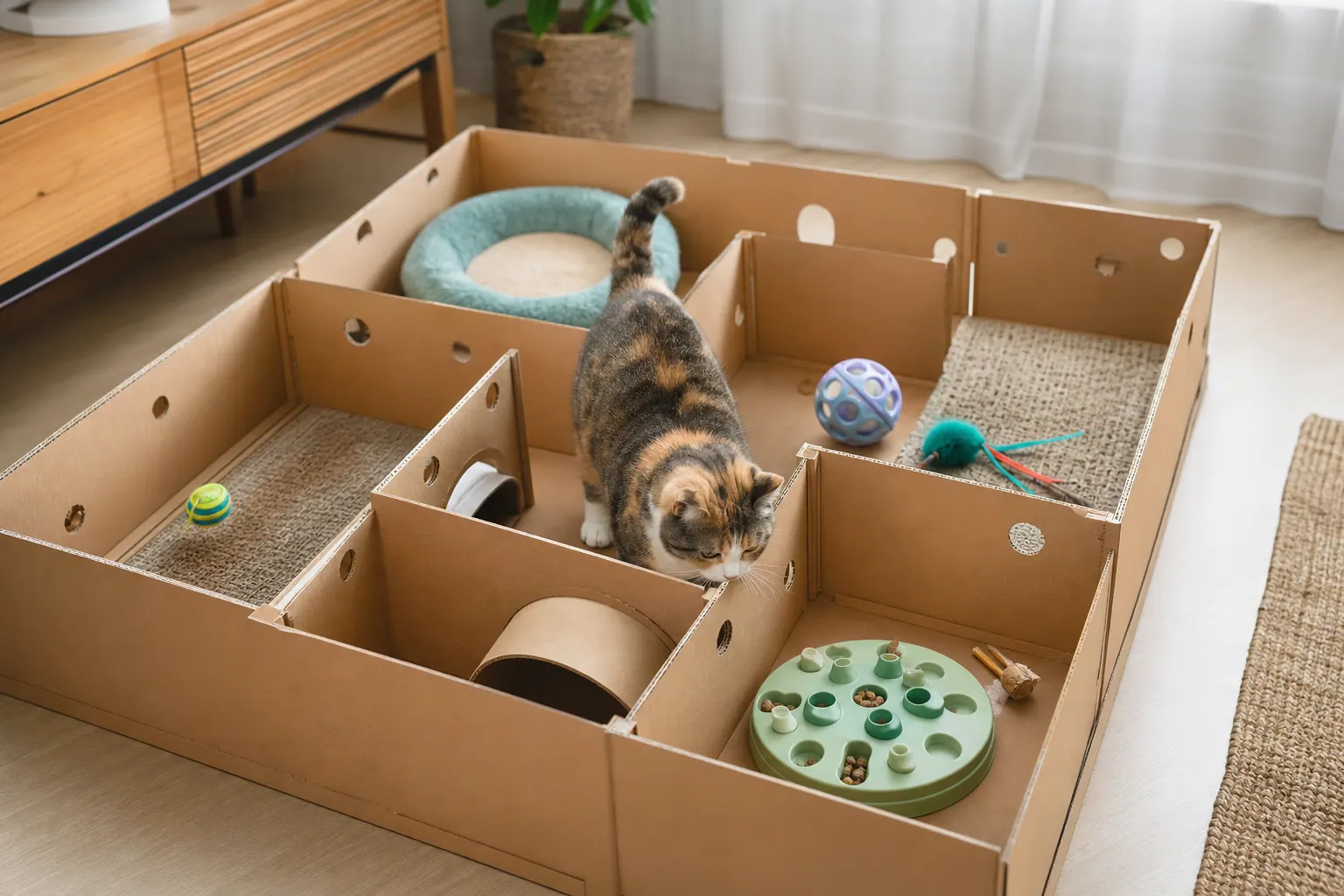
Boxes are enrichment classics. Cut two entrances in a box to avoid trapping a nervous cat. Add tissue paper, a toy, or a treat trail. Replace damaged boxes before loose tape or staples become hazards.
Training for fun
Training is enrichment when it stays short and positive. Teach the cat to touch a target, enter a carrier, sit on a mat, or come when called. Reward with tiny treats or play. Stop while the cat still wants more. Practical training makes care easier and gives smart cats a safe challenge.
Wand toys should act like prey. Move low, hide behind a chair, pause, dash, and let the cat catch the toy. End with food or a treat. Laser play should end with a physical toy the cat can grab, since endless chasing without a catch can frustrate some cats.
Shareable enrichment moments
Enrichment content is naturally social. A box maze, puzzle feeder, new perch, or target-training win can become a short post that teaches and entertains. Keep the setup safe and let the cat opt out. The best clips often show curiosity, not chaos.
Rotate ideas through the week: scent day, climbing day, puzzle day, grooming reward day, and quiet window time. Fun cat enrichment ideas should reduce stress, not create pressure. When the cat chooses to participate, the activity becomes both care and connection.
Make enrichment fit the cat's age and confidence. Kittens may enjoy tunnels and chase games. Adult cats may like food puzzles, perch routes, and target training. Senior cats may prefer low boxes, soft scent games, and gentle play on a rug. The activity should meet the cat where it is, not where a video trend says it should be.
Keep a rotation list on the fridge or phone. Box day, brush day, treat hunt day, perch day, quiet cuddle day, and carrier snack day can repeat each week. Rotation keeps ideas fresh for the cat and easy for the owner. It also creates shareable moments without buying new toys all the time.
Safety checks should happen before every new game. Remove string after play, avoid small parts that can be swallowed, and supervise bags or boxes with handles. If the cat pants, hides, or refuses to re-engage, choose a calmer activity. Enrichment should leave the cat curious, not overwhelmed.
Owners can reuse household items with care. A towel can become a treat mat, a cardboard box can become a hideout, and a paper bag without handles can become a rustling cave. Free ideas are often the ones cats love most, as long as safety comes before novelty.
Track favorites over time. If the cat returns to one box, toy, or perch again and again, build future enrichment around that preference.
Preference tracking also makes future posts more personal and useful.
Sources: AAHA/AAFP https://www.aaha.org/resources/2021-aaha-aafp-feline-life-stage-guidelines/ ASPCA https://www.aspca.org/adopt-pet/adoption-tips