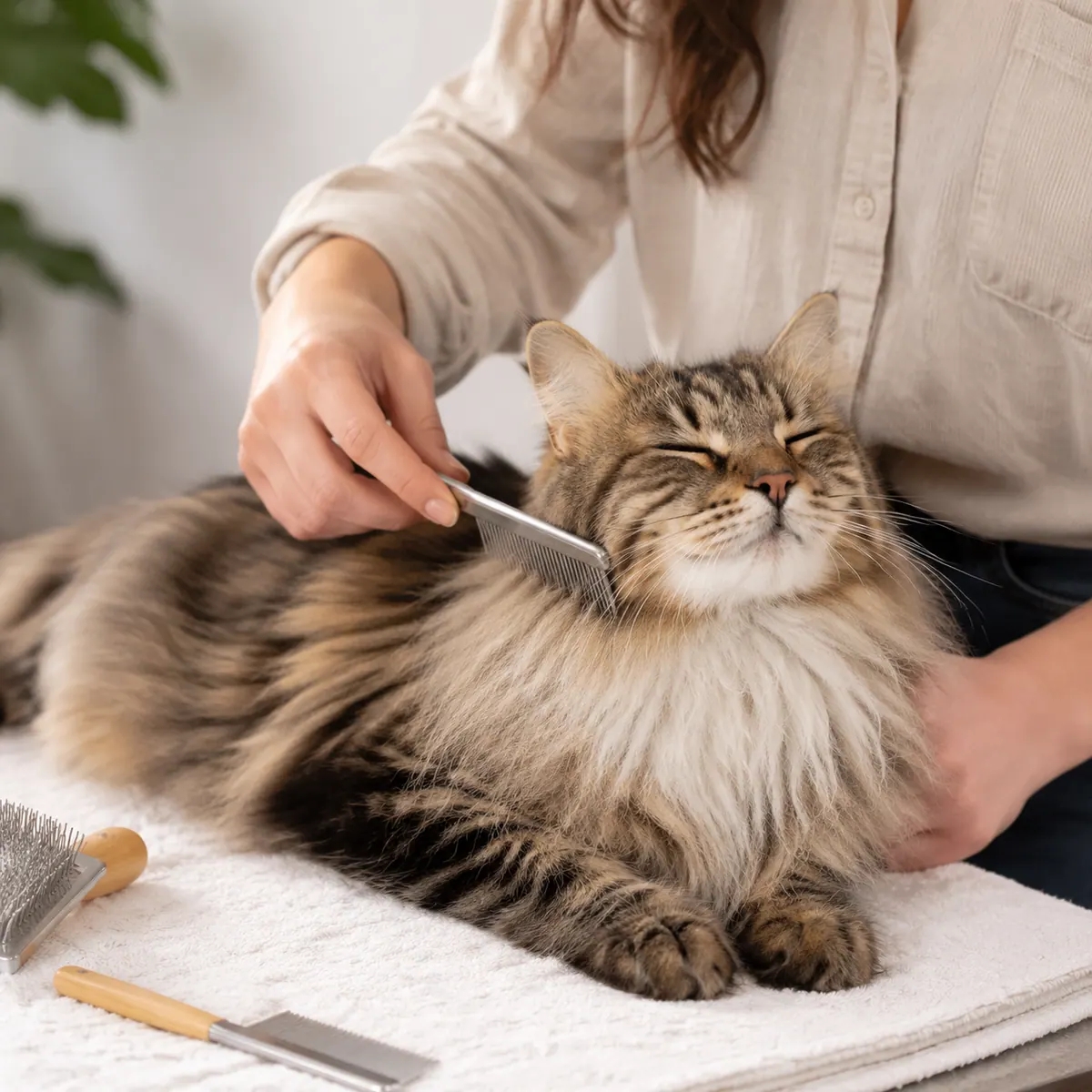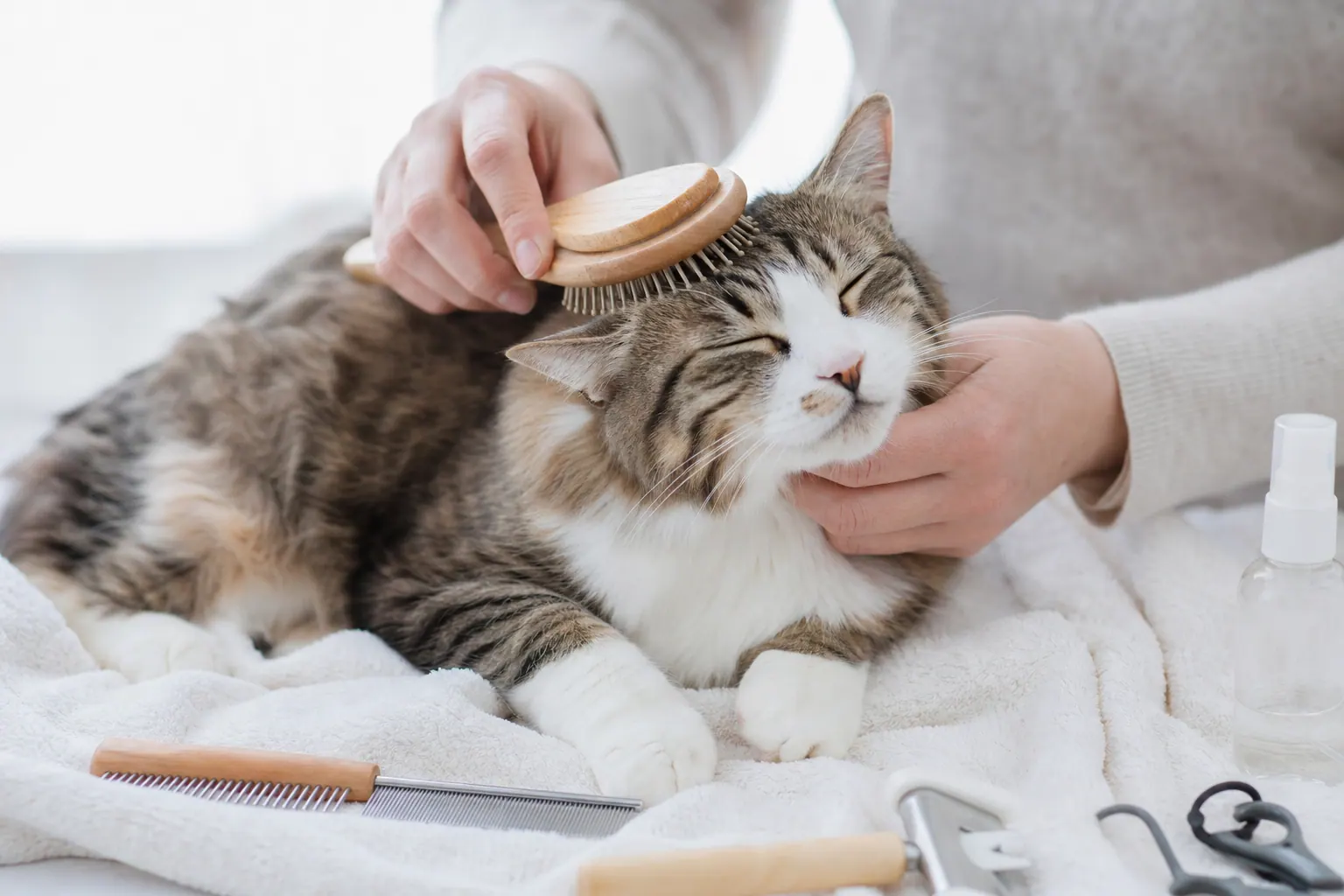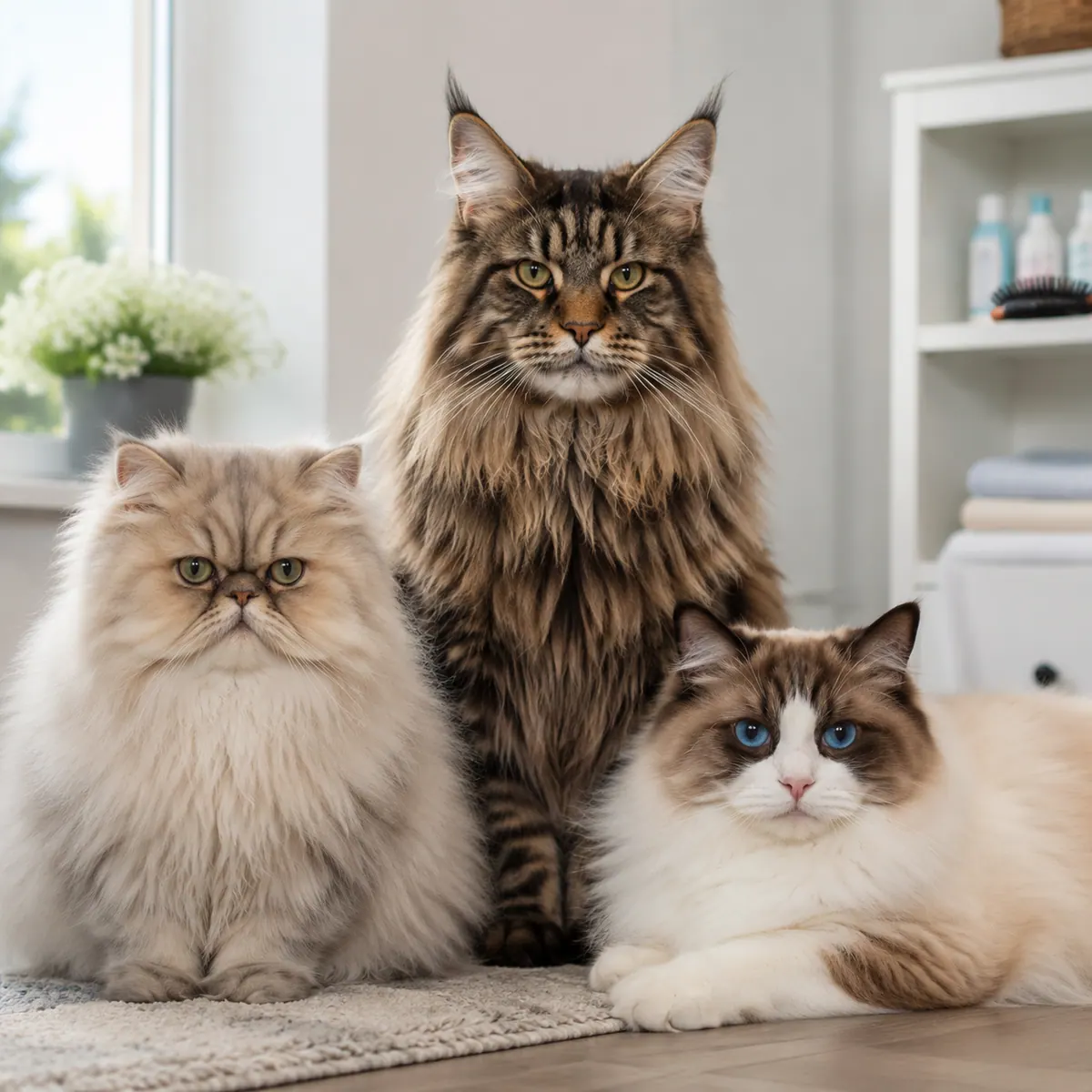
A long haired cat breeds guide should start with grooming, not glamour. Persian, Maine Coon, Ragdoll, Siberian, Birman, Himalayan, Turkish Angora, and Norwegian Forest Cats can be beautiful companions, but long coats require regular care. Mats pull skin, hide parasites, trap litter, and make movement uncomfortable. The right breed depends on coat texture, owner schedule, climate, and tolerance for shedding.
Persian and Himalayan cats
Persians are famous for dense coats, round faces, and quiet indoor style. They often suit calm homes where grooming is a shared daily habit. The coat needs combing down to the skin, not only surface brushing. Many Persians also need eye cleaning. Flat-faced lines may have tear staining, dental crowding, and breathing concerns, making breeder ethics and veterinary care important.
Himalayans share Persian-type body and coat with pointed coloring. They need similar grooming and face care. They may fit owners who want a quiet, affectionate cat and are ready for daily coat work. A Persian or Himalayan is not a low-maintenance decor piece. It is a high-contact grooming commitment.
Maine Coon, Siberian, and Norwegian Forest Cat
Maine Coons, Siberians, and Norwegian Forest Cats carry coats shaped by cold climates. Their fur can be easier to manage than Persian coats, but it still sheds and can mat behind ears, under legs, and around the ruff. These breeds are usually larger and need sturdy furniture, wide litter boxes, and carriers sized for their bodies.
Maine Coons are social and often playful. Siberians tend to be agile, strong, and family-oriented. Norwegian Forest Cats can be athletic climbers with a weather-resistant coat. Owners should ask breeders about screening practices, including heart health where relevant.
Ragdoll, Birman, and Turkish Angora
Ragdolls often appeal to families seeking a gentle longhaired cat. Their coat is usually less dense than a Persian coat, but regular combing still matters. Birmans have silky medium-long coats, white gloves, and a sweet social style. Turkish Angoras are graceful, active cats with a fine coat that may need less heavy combing than dense-coated breeds.
These cats still need enrichment. Long hair does not mean low energy. Offer climbing spots, wand play, scratching posts, and puzzle feeders. Grooming sessions should be short and positive. Start with a comb, reward cooperation, and stop before the cat becomes frustrated.
Health and owner fit
Long-haired cats may swallow more hair during grooming, which can contribute to hairballs. Regular combing reduces loose fur. Weight control matters, since an overweight cat may struggle to groom the back and hips. Senior long-haired cats may need more help as flexibility changes.
A long haired cat breeds guide is really a time guide. If daily combing sounds pleasant, Persians and Himalayans may fit. If several weekly grooming sessions sound more realistic, Ragdolls, Birmans, Maine Coons, Siberians, Norwegian Forest Cats, and Turkish Angoras may be easier matches. Choose the coat you can maintain when life gets busy.
Daily coat checks should include friction zones: armpits, belly, back legs, tail base, and behind the ears. Use a metal comb, not only a soft brush, to find early tangles. If the comb catches, stop and work gently from the edge. Tight mats should be handled by a veterinarian or groomer, since cutting close to feline skin can cause injury.
Seasonal shedding changes the schedule. A Siberian or Norwegian Forest Cat may need extra combing during coat changes. A Persian may need daily work all year. Grooming should be introduced like training: short session, reward, pause. A cat that accepts two calm minutes today can learn longer care over time.
Climate and home layout matter too. A heavy-coated cat may seek cool floors in warm rooms and warm beds in winter. Keep water available, remove loose coat before mats form, and check skin under the fur during every grooming session. Coat care is health care, not vanity.
Owners should also plan travel care. A pet sitter needs grooming notes, preferred tools, and permission to call a veterinarian if mats or skin pain appear. Long-haired breeds do best when coat care stays consistent during holidays and busy weeks.
Sources: CFA https://cfa.org/breeds/ AAHA/AAFP https://www.aaha.org/resources/2021-aaha-aafp-feline-life-stage-guidelines/