A low shedding cat breeds guide needs an honest warning: no cat breed is truly allergy-free. Cat allergens come from saliva, skin, and other secretions, not only loose hair. A cat that sheds less may leave less fur on furniture, but an allergic person can still react. The smart path is to meet the breed, talk with an allergist, and plan cleaning, grooming, air filtration, and bedroom boundaries.
Hairless and curly-coated breeds
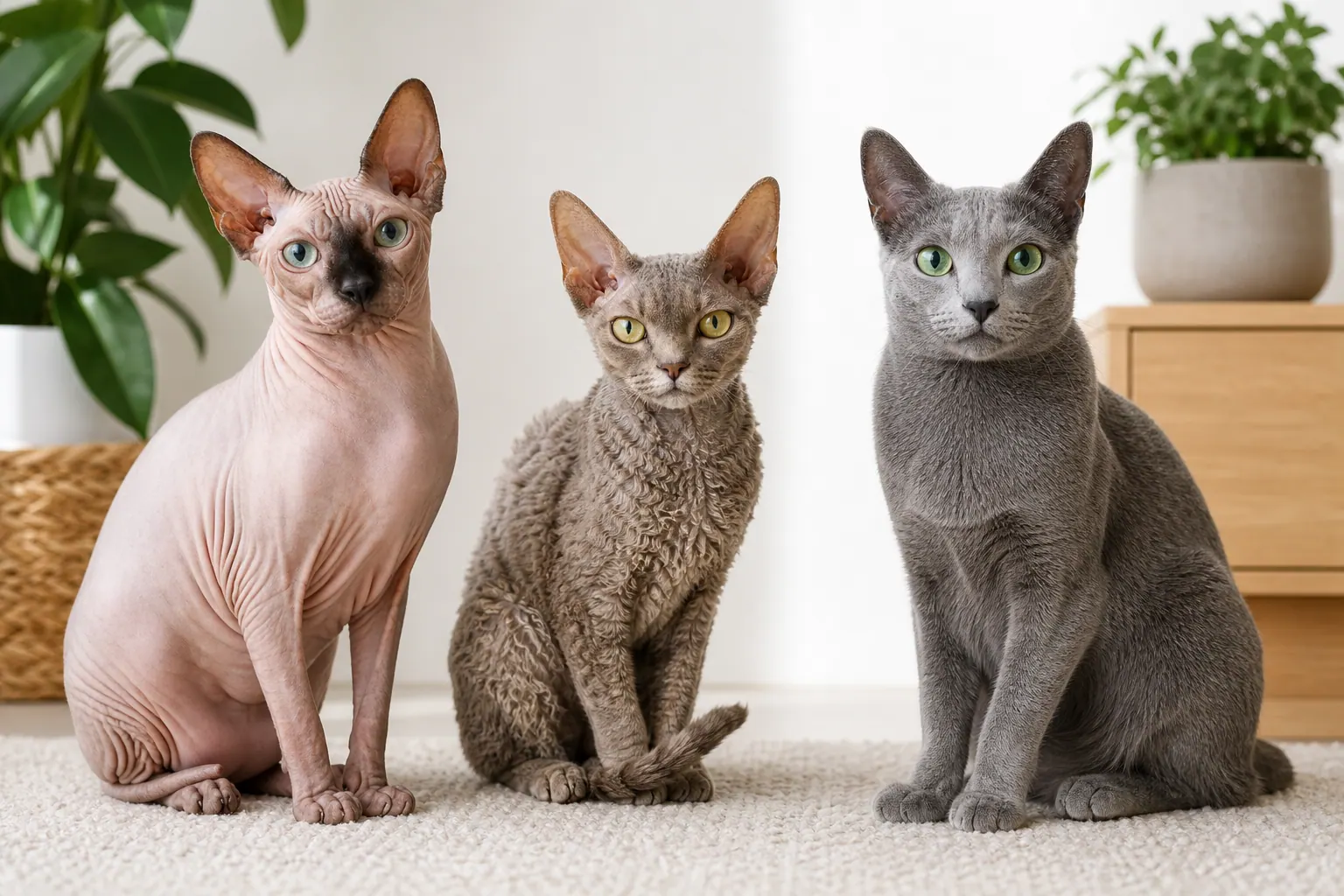
Sphynx cats look like the obvious low-shedding choice, but they are not low-care. Their skin can collect oil and needs gentle bathing or wiping. They lose body heat faster than coated cats and often seek warmth. Owners should protect them from cold, sun exposure, and rough surfaces. Ask breeders about heart screening, since hypertrophic cardiomyopathy is discussed in Sphynx health circles.
Devon Rex and Cornish Rex cats have short, wavy coats. They may shed less visibly than many straight-coated breeds. They are often playful, people-focused, and active. Their fine coats do not replace the need for warmth, skin checks, nail trims, and veterinary care. These breeds suit owners who want a social cat and can offer daily interaction.
Russian Blue, Balinese, and Siberian
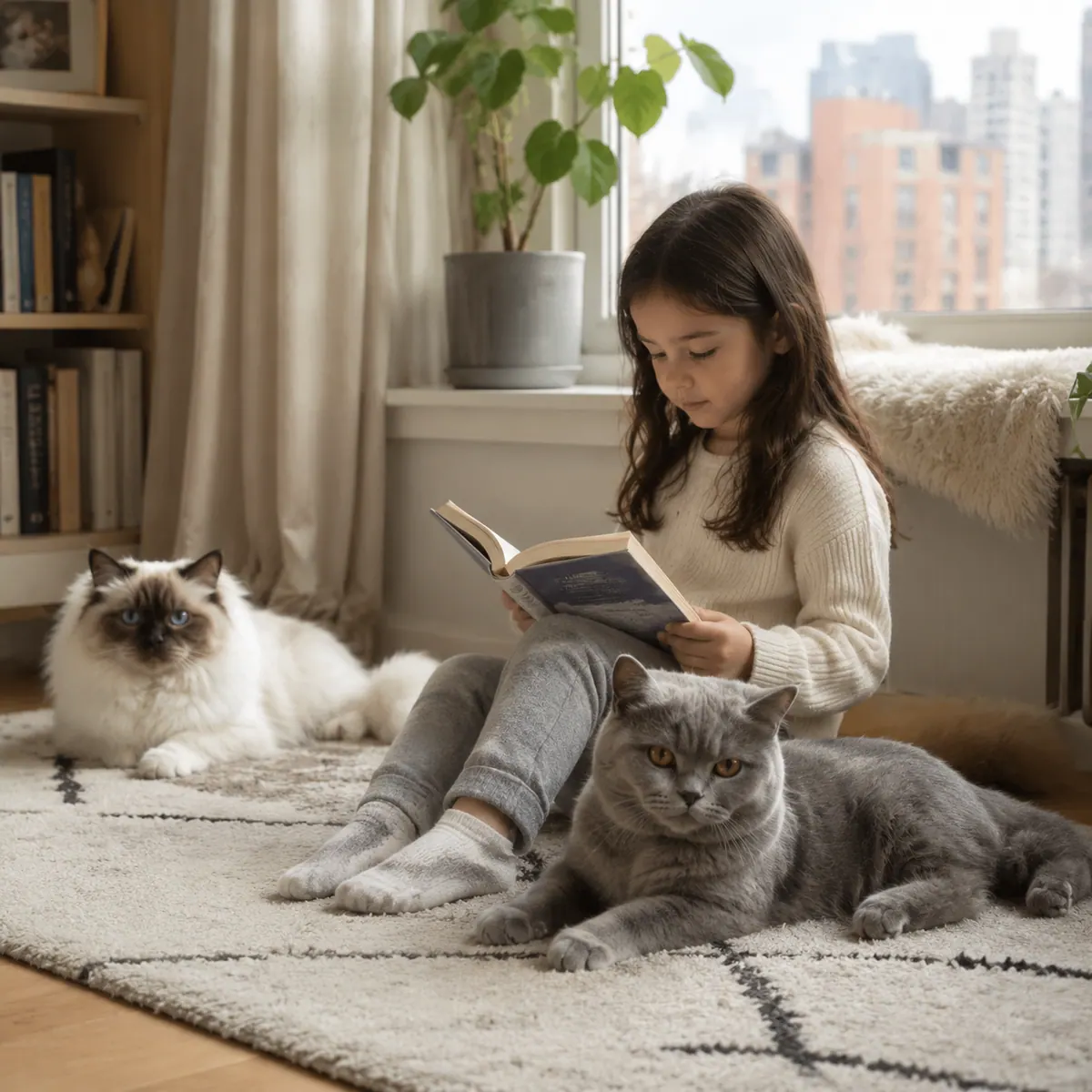
Russian Blues have short dense coats with a silver-blue look. They may appeal to tidy homes since grooming is simple and shedding may feel manageable. They can be reserved with strangers and affectionate with trusted people.
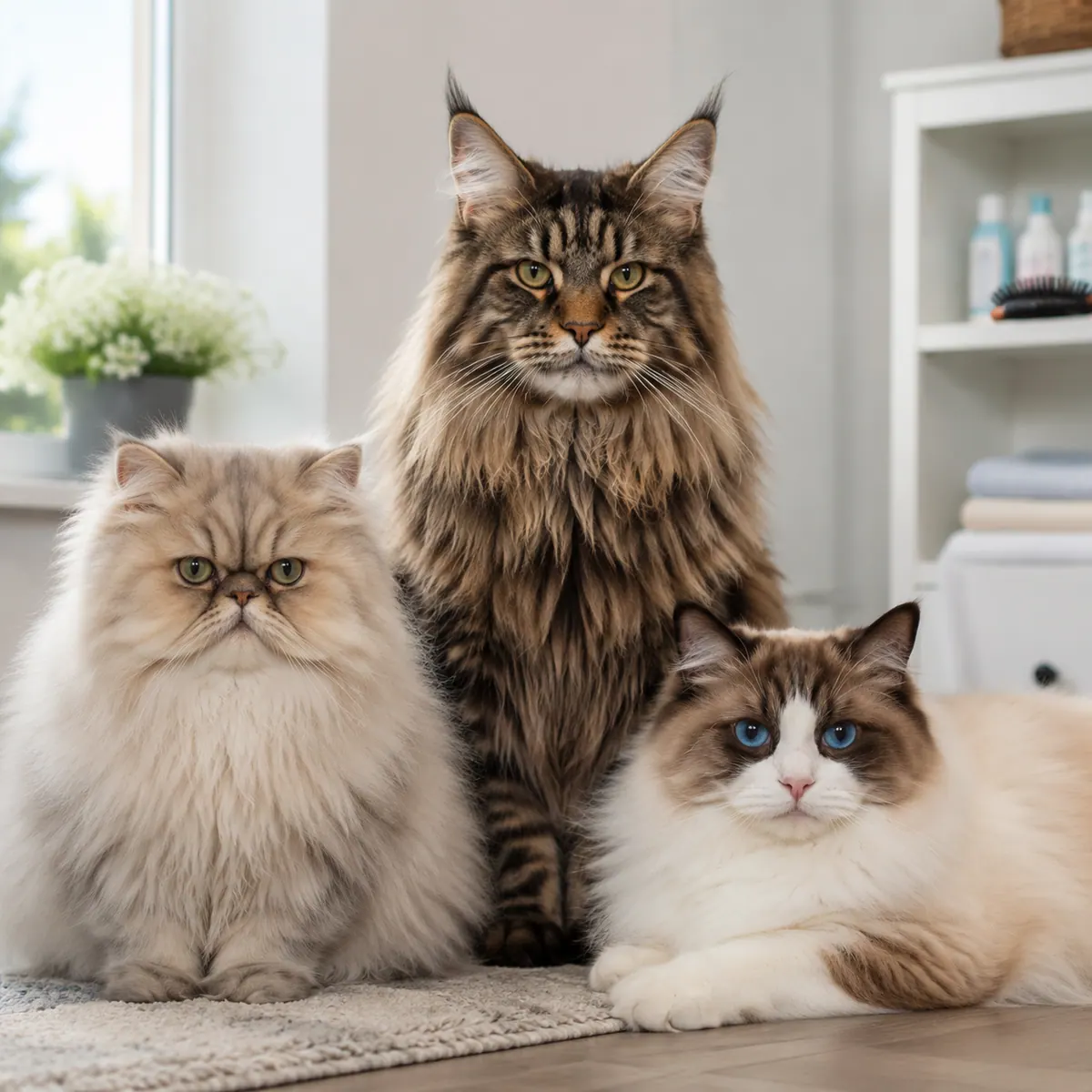
Balinese cats are longhaired relatives of the Siamese type: vocal, active, and attached to people. Some allergy discussions mention Balinese and Siberian cats, but owner reactions vary. Siberians have thick coats and may shed seasonally, which makes the low-shedding label misleading. A person with allergies should spend time around adult cats from the line before making a decision.
Cleaning and grooming strategy
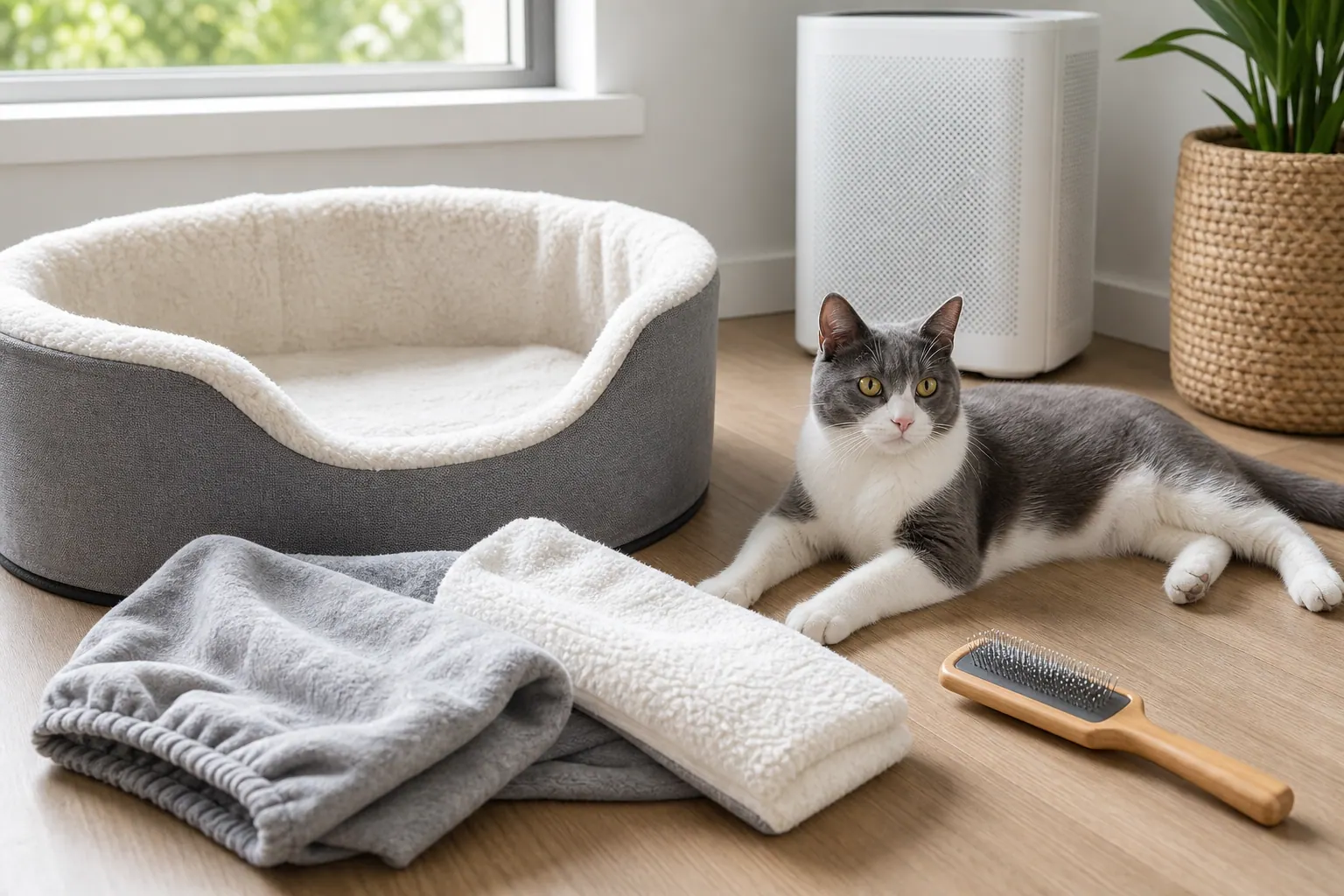
Breed choice alone will not control fur or allergens. Brush coated cats regularly, wipe Sphynx skin as advised by a veterinarian or breeder, wash bedding, vacuum with a suitable filter, and keep litter areas clean. Air purifiers may help some homes. Keep the cat out of the allergic person's bedroom if symptoms are serious.
Bathing should be gentle and breed-appropriate. Over-bathing coated cats can dry skin. Under-cleaning Sphynx skin can leave oily residue. Nail care matters too, since hairless and fine-coated cats may show scratches more easily.
Who should choose these breeds
Sphynx, Devon Rex, and Cornish Rex cats often fit owners who want high-contact companions and do not mind skin or coat routines. Russian Blues may fit quieter homes. Balinese cats suit people who enjoy talkative, interactive cats. Siberians fit owners who want a sturdy longhaired cat and can manage seasonal coat care.
The best low shedding cat breeds guide is realistic. Less visible fur is useful, but allergies and care needs do not disappear. Meet the cat, test your body's response, and choose the temperament you can live with daily.
Before choosing a cat for allergies, arrange repeated visits with adult cats of the same breed or line. Kittens may not show the same allergen pattern as adults, and a short visit may not predict daily exposure. Bring allergy medication only under medical guidance, and leave if breathing symptoms appear.
Owner fit still matters more than fur claims. A Sphynx that wants body warmth and attention may not suit a person who travels often. A Balinese may talk more than an apartment neighbor likes. A Russian Blue may need slow introductions to visitors. Low shedding cat breeds should be selected for temperament and care routines, not marketing phrases.
Cleaning routines should be realistic. Wash throws and cat beds weekly, choose washable covers, and groom near a surface that is easy to clean. Owners with allergies should avoid letting the cat sleep on pillows. A written plan helps every household member keep exposure lower.
Health screening should never be skipped for coat reasons. Ask the same questions you would ask for any cat: heart history, dental care, weight, vaccination records, parasite prevention, and behavior around handling. A tidy coat does not guarantee an easy medical life.
Sources: CFA https://cfa.org/breeds/ AAHA/AAFP https://www.aaha.org/resources/2021-aaha-aafp-feline-life-stage-guidelines/