A multi cat household guide begins with one truth: cats can share a home without sharing every resource. Many conflicts start when food, litter boxes, resting spots, human attention, or escape routes are too limited or too clustered. Cats may not fight loudly. One cat may block a hallway, stare from a doorway, guard a box, or force another cat to hide. Peace comes from space, choice, and slow introductions.
Introduce cats slowly
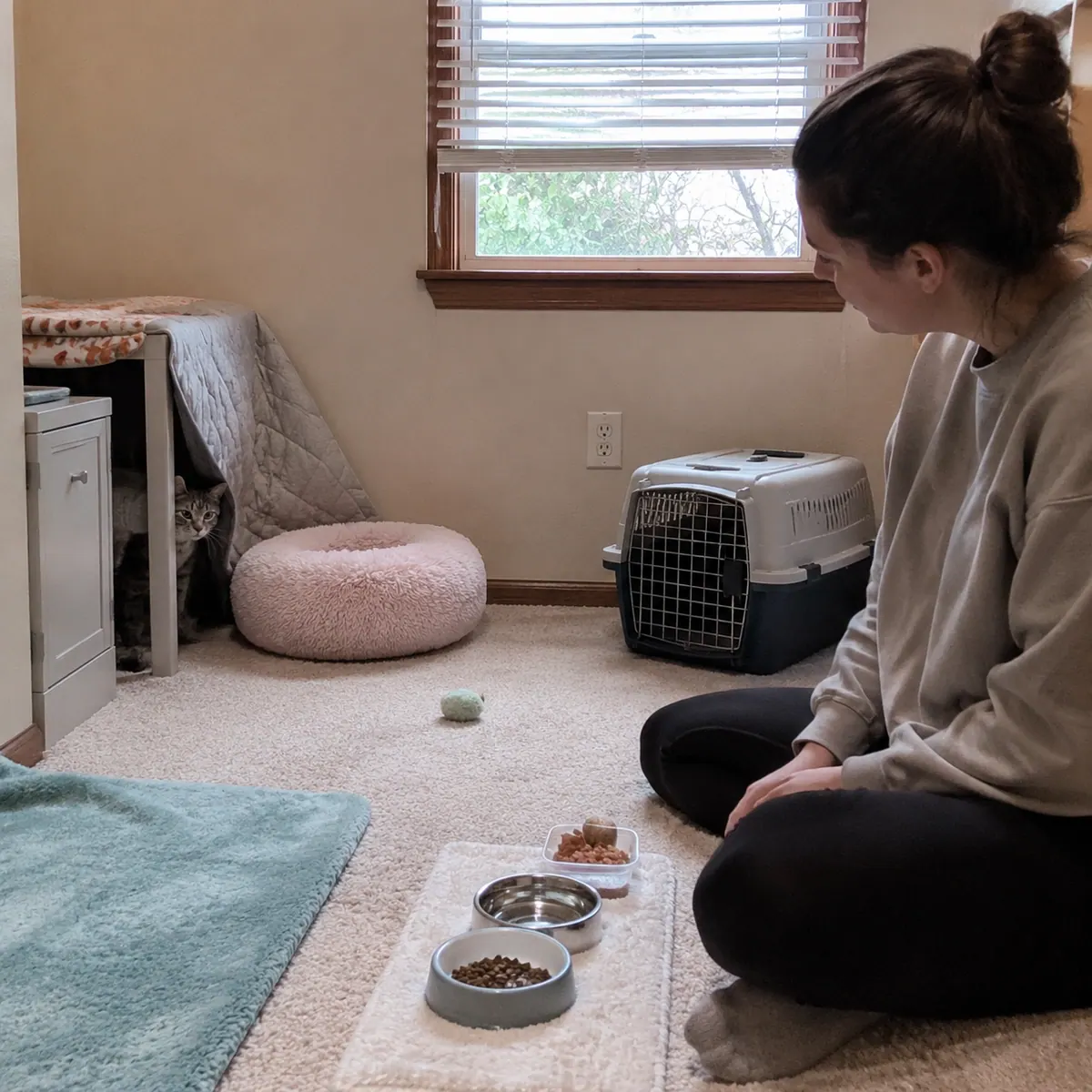
A new cat should start behind a closed door with its own full setup. Trade bedding or cloths to share scent. Feed on opposite sides of the door at a distance where both cats can eat. Move bowls closer across days only when both remain relaxed. Use a gate or cracked door for brief visual contact. Keep sessions short and end before staring, growling, chasing, or swatting begins.
Do not place cats face to face and hope they work it out. A bad opening meeting can create fear that takes weeks to repair. If tension appears, return to scent and closed-door feeding. Progress is measured by calm eating, loose posture, and easy recovery after seeing the other cat.
Resource layout
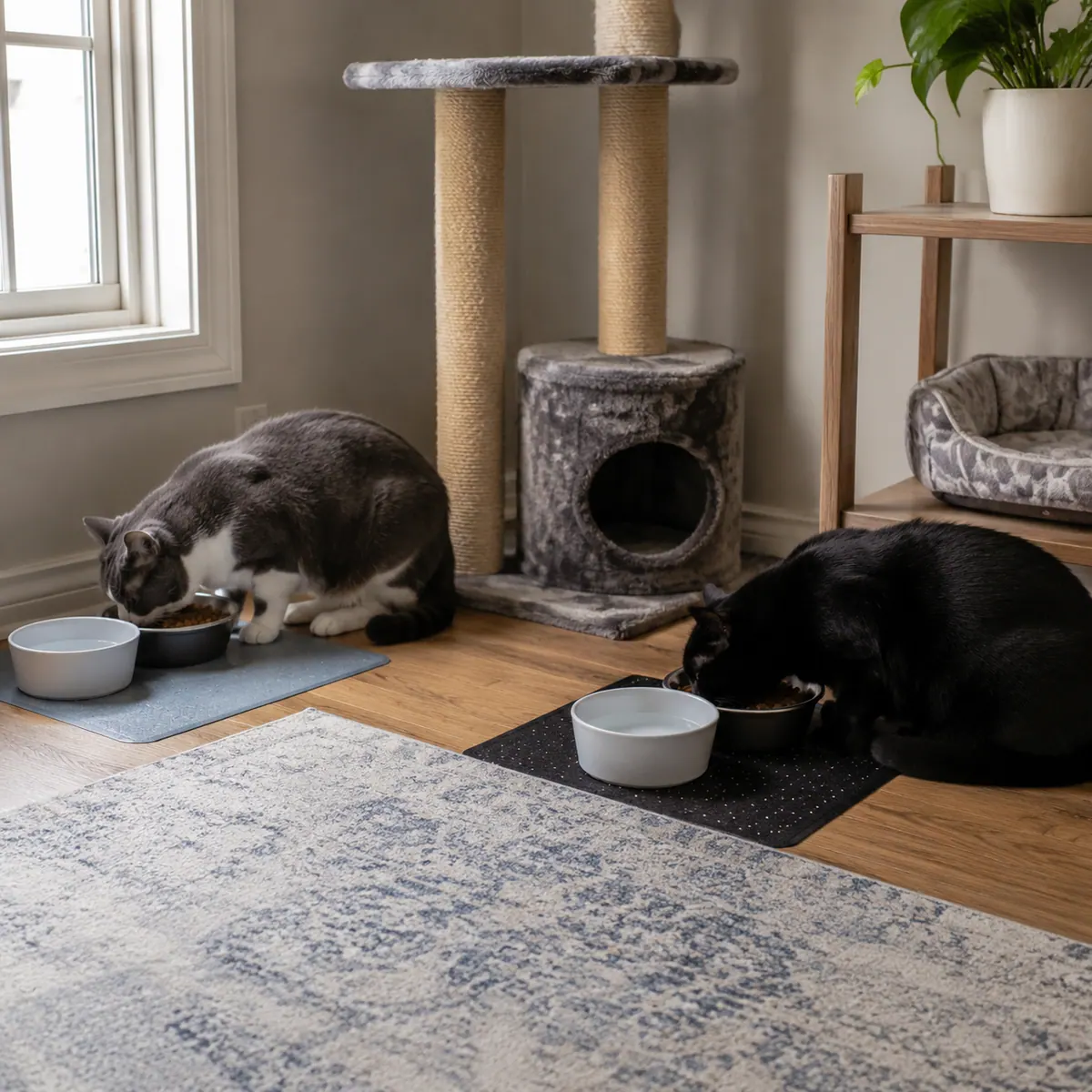
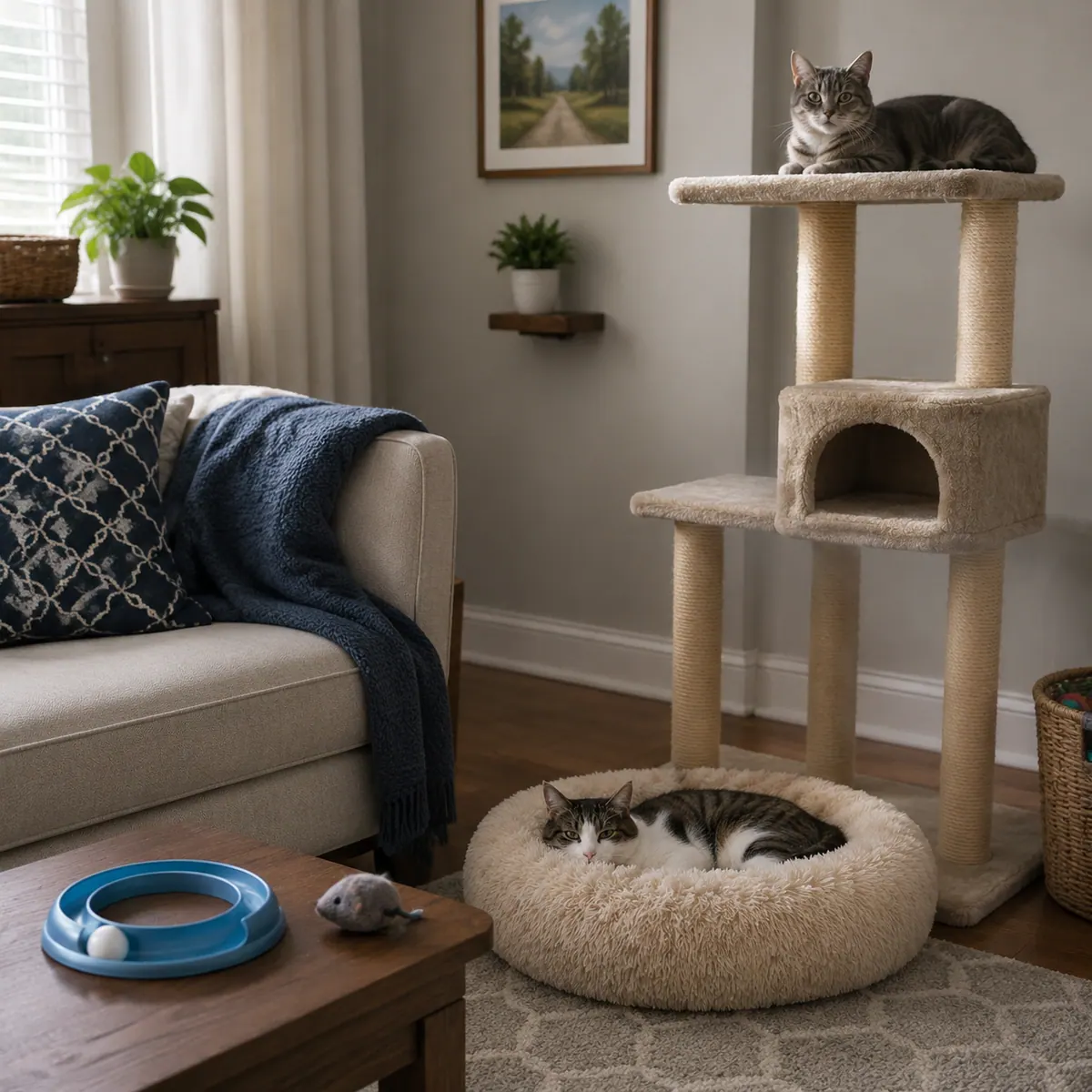
Spread resources across the home. Use multiple feeding stations, water stations, scratching surfaces, beds, hiding spaces, and vertical perches. Litter boxes should be in separate useful locations, not lined up like stalls in one room. A common rule is one box per cat plus one extra, but placement matters as much as number. A blocked box is not truly available.
Vertical space helps cats avoid conflict. Shelves, cat trees, window perches, and furniture routes let one cat pass without crossing another cat's body zone. Hiding areas should have more than one exit when possible. Dead-end hiding can turn fear into defensive aggression.
Spot quiet conflict
Watch for subtle signs. One cat may eat quickly and leave. Another may stop using a box, sleep in only one room, avoid hallways, or wait until night to move. Staring, blocking, chasing, tail lashing, flattened ears, and low growling are clearer signs. Grooming another cat can be friendly, but it can also end in tension if one cat pins the other.
Medical issues can change relationships. Pain, hyperthyroidism, arthritis, dental disease, urinary problems, or cognitive changes may make a cat irritable or vulnerable. A sudden fight between cats that used to live peacefully deserves veterinary input.
Daily peace plan
Play with each cat in a way that protects confidence. Some cats enjoy group play. Others need solo sessions behind a door. Feed meals in separate zones if one cat guards food. Reward calm glances, relaxed passing, and resting in the same room. Do not punish hissing. Hissing is information and distance setting, not misbehavior.
A multi cat household guide is about lowering competition. The Spruce Pets notes that poor introductions, limited resources, medical issues, and unmet play needs can contribute to inter-cat aggression. Owners cannot force friendship, but they can create a home where each cat can eat, rest, eliminate, scratch, play, and retreat without pressure. That is the foundation for a peaceful shared space.
Create routines that prevent crowding. Feed cats in predictable stations and pick up bowls after meals if food guarding appears. Offer play sessions in separate rooms for cats with different confidence levels. Place water where no cat can sit and block the only route. During treat time, toss treats away from the group rather than handing everything in one cluster.
When conflict is active, slow the home down. Block visual access for part of the day, reopen scent swapping, and reward calm presence at a distance. Do not scold a cat for hissing or hiding. Those behaviors show discomfort. A multi cat household guide succeeds when owners answer discomfort with more space, clearer resources, and patient rebuilding.
Keep reunions calm after vet visits. A returning cat may smell different and trigger suspicion. Place the returning cat in a quiet room with food, water, and litter until everyone smells and acts normal again.
Some pairs may only tolerate each other, and that can still be a humane outcome. Separate favorite beds, predictable feeding, and calm routes through the home may matter more than shared cuddling.
Sources: AAHA/AAFP https://www.aaha.org/resources/2021-aaha-aafp-feline-life-stage-guidelines/ The Spruce Pets https://www.thesprucepets.com/aggression-between-family-cats-551794