A new cat owner care guide works best when it starts before the cat arrives. The goal is not to buy every product in the pet aisle. The goal is to build a quiet, predictable home where food, water, rest, litter, play, and veterinary care all have a place. Cats learn by scent, routine, and safety. A careful setup helps a shy cat decompress and gives an active cat better ways to spend energy.
New cat owner care guide basics
Prepare one small starter room with a litter box, food, water, bedding, a scratching surface, and a hiding spot. This room gives the cat a clear base while the home still smells unfamiliar. Keep loud guests, vacuuming, and fast introductions away during the opening days. Sit nearby, speak softly, and let the cat approach on its own schedule. A confident cat may explore sooner. A cautious cat may need several days before seeking touch.
Choose supplies that fit the cat, not the store display. A litter box should be easy to enter and large enough for turning around. Place it away from food and water. Use unscented litter at the start unless the cat already has a known preference. Put scratching posts near resting areas and main paths, as many cats stretch after sleep and mark familiar routes with scent from their paws.
Safety checks should happen before free roaming. Put away string, ribbon, sewing thread, small toys, medication, cleaning products, and fragile objects. Check that windows have secure screens and that balcony doors stay closed. Many houseplants are unsafe for cats, including lilies, which can be dangerous even in small exposures. If the cat will wear a collar, choose a breakaway style with an identification tag. A microchip adds another layer of protection if a door is left open.
Feeding and water habits
Food should match the cat's life stage. Kittens need growth formulas, adult cats need maintenance diets, and pregnant or nursing cats need food labeled for that stage. Cornell Feline Health Center notes that cats are obligate carnivores and need nutrients found in animal products. A complete and balanced commercial food is the simplest base for most homes. Treats should stay small, and rich human food should not become a daily habit.
Fresh water should be easy to find. Some cats drink better from wide bowls that do not press their whiskers. Others prefer a fountain. Keep water away from the litter box and refresh it daily. Wet food can support water intake, while dry food may suit budget and storage needs. Many homes use both.
Litter and cleaning routines
Scoop the litter box daily and wash the box on a regular schedule with mild, unscented soap. Strong smells can make a box less attractive to the cat. If the cat avoids the box, do not treat it as spite. Pain, urinary disease, constipation, arthritis, stress, dirty boxes, or poor placement can all change litter habits. A veterinarian should check any sudden change, straining, blood, repeated trips, or vocalizing in the box.
Health and bonding routine
Book a veterinary visit soon after adoption. Bring any records you received, ask about vaccines, parasite control, spay or neuter timing, dental care, and microchipping. At home, learn the cat's normal appetite, energy, stool, urine, coat, and mood. Small shifts matter when they persist.
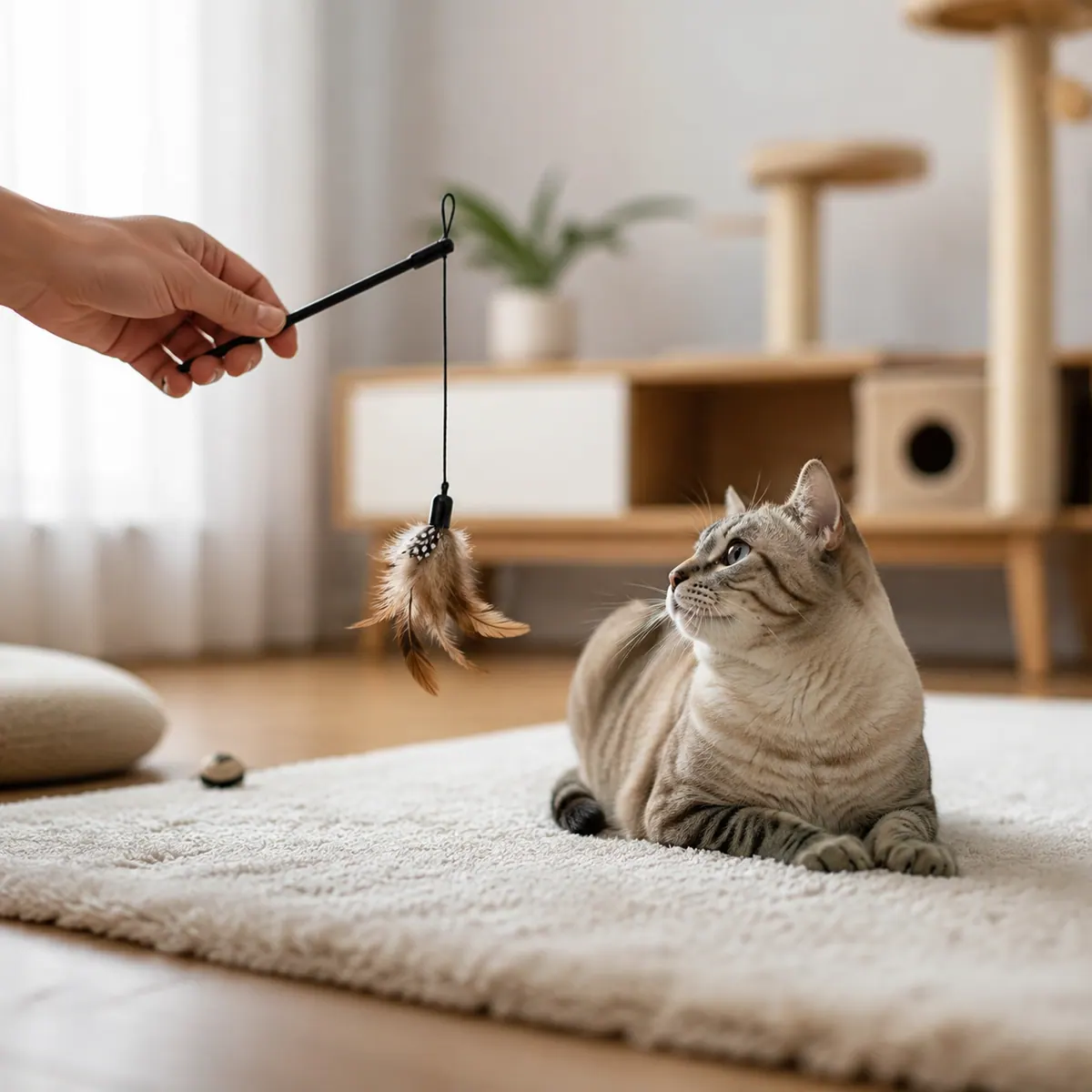
Daily play builds trust and reduces trouble. Use wand toys, toss small soft toys, rotate puzzle feeders, and end active play with a small meal or treat. Do not use hands as toys. Trim nails gradually, brush the coat gently, and practice short handling sessions with rewards. The best new cat owner care guide is steady, quiet, and repeatable. A cat that knows what happens each day can settle into the home with less stress and more confidence.
Introduce other pets slowly. Scent swapping, closed-door feeding, and brief supervised meetings work better than placing animals face to face. Watch posture, tail movement, ear position, and vocalizing. Retreat should always be available. Children also need coaching. Gentle strokes, quiet voices, and respect for hiding places protect both the cat and the household. When care starts with patience, the new cat owner care guide becomes a daily relationship, not a one-time setup.
Sources: Cornell Feline Health Center https://www.vet.cornell.edu/departments-centers-and-institutes/cornell-feline-health-center/health-information/feline-health-topics/choosing-and-caring-your-new-cat Cornell Feline Health Center https://www.vet.cornell.edu/departments-centers-and-institutes/cornell-feline-health-center/health-information/feline-health-topics/feeding-your-cat