The opening 30 days with an adopted cat should feel calm, slow, and predictable. Adoption does not end when the carrier enters the door. The cat still needs to learn the smells, sounds, people, schedule, and safe places of the home. A simple month-long plan helps owners avoid rushing introductions and gives the cat a fair chance to settle.
Days 1 to 3
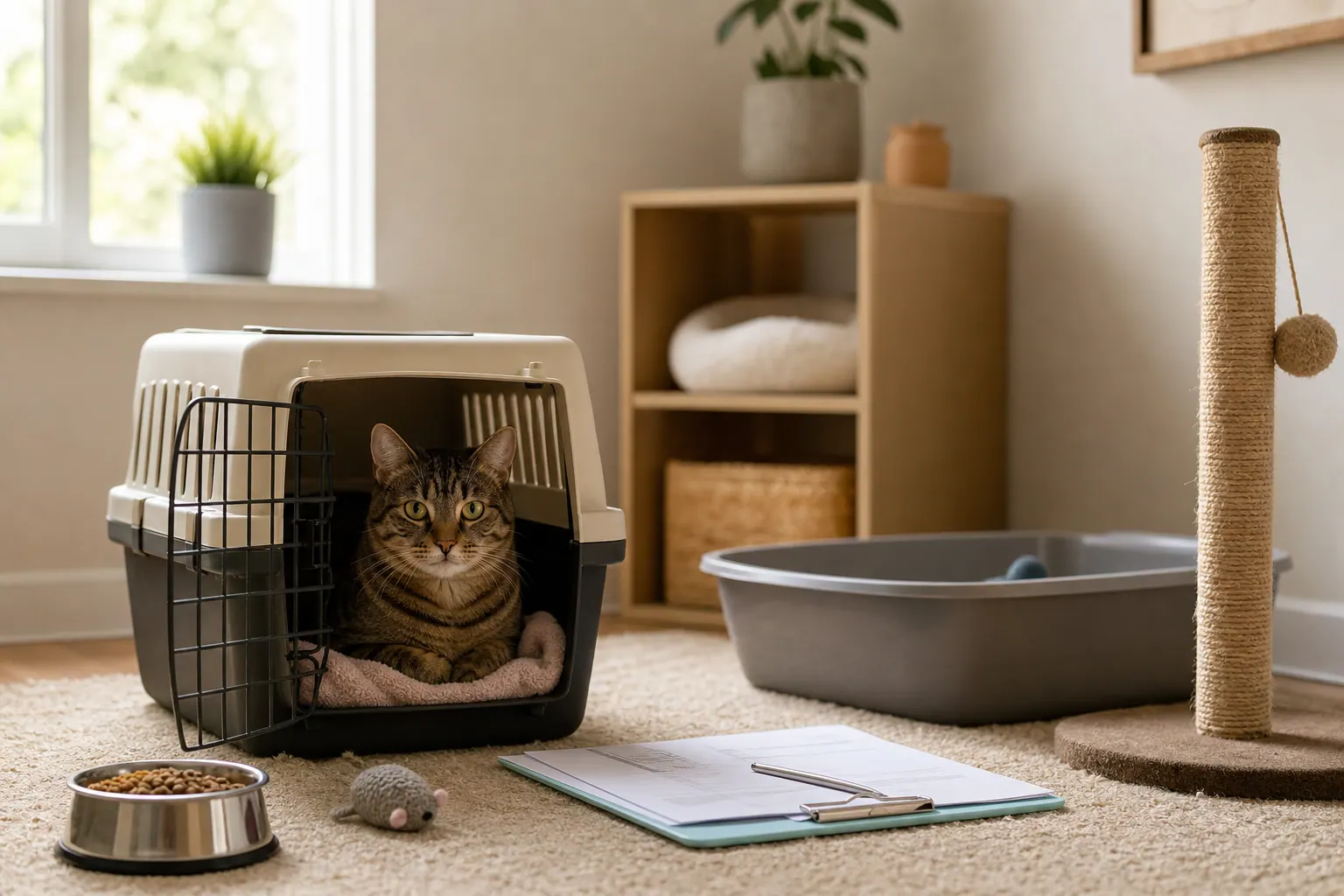
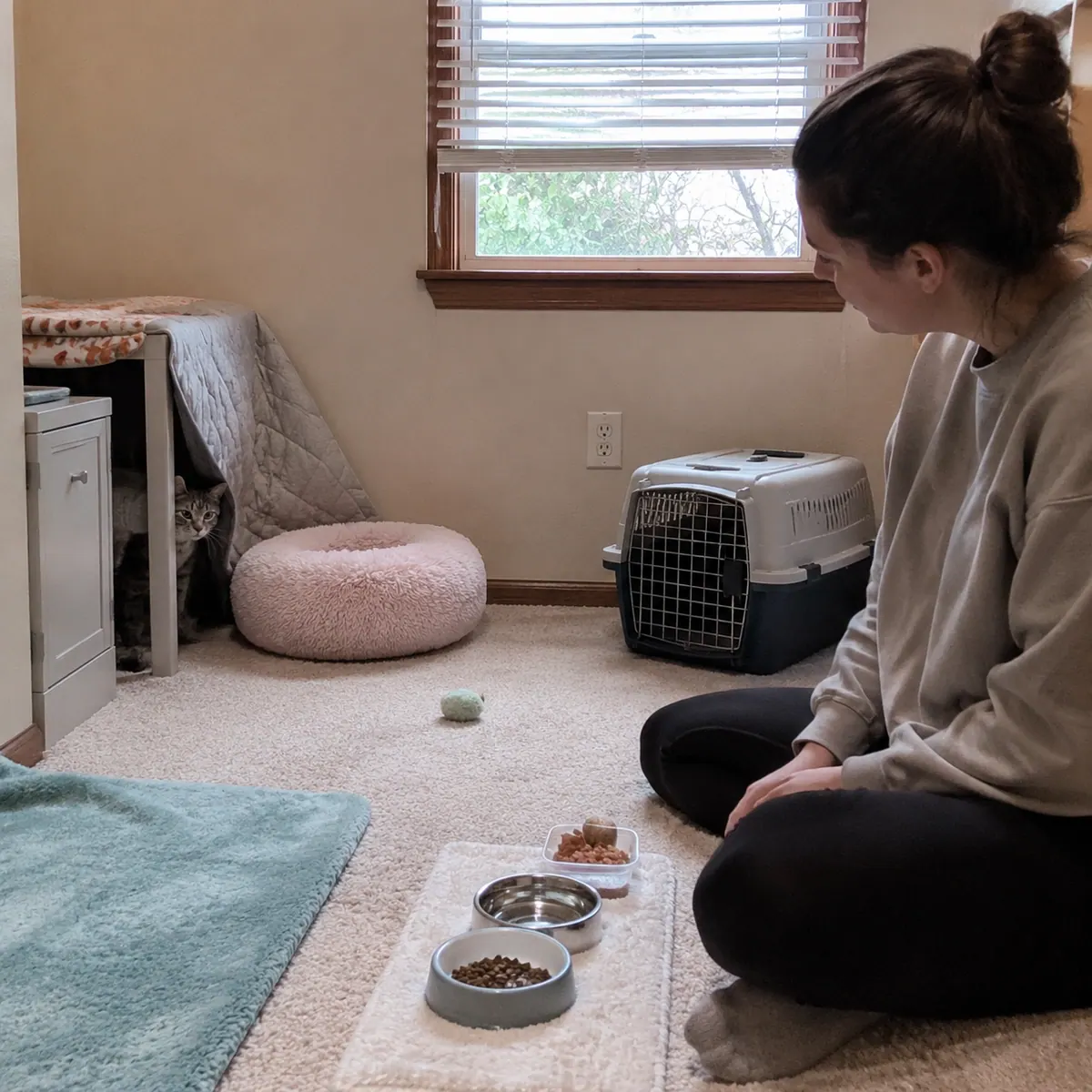
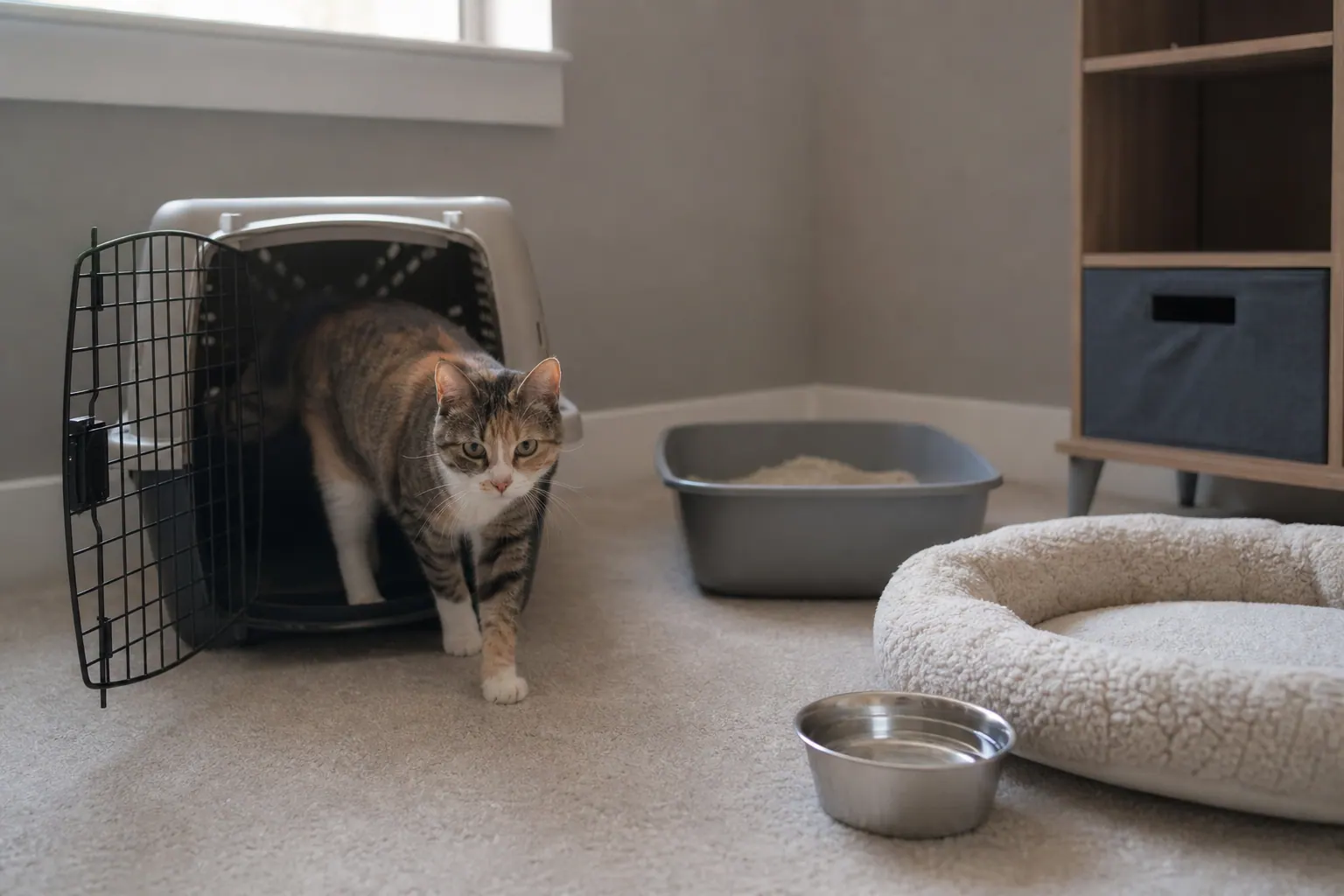
Start with one quiet room. Place the litter box away from food and water. Add a hiding spot, bed, scratching post, toys, and familiar food if the shelter provided it. Open the carrier and let the cat leave without being pulled. Some cats walk out quickly. Others hide for hours. Both responses can be normal.
Keep visitors away at the beginning. Sit in the room, speak softly, and let the cat choose distance. Do not force petting, picking up, or photos. Watch appetite, water intake, litter use, breathing, and energy. A cat that refuses food, strains in the litter box, seems weak, or hides with no improvement may need veterinary guidance.
Week 1
Build routine. Feed at predictable times, scoop the box daily, refresh water, and offer gentle play. Use wand toys rather than hands. Reward brave choices: sniffing a hand, stepping from hiding, using a scratcher, or entering the carrier. Keep sessions short.
Book a veterinary visit if one is not already scheduled. Bring adoption records and ask about vaccines, parasite prevention, microchip registration, dental care, diet, and spay or neuter status. The AAHA/AAFP feline life stage guidelines emphasize life-stage care, behavior, and environmental needs as part of routine health.
Weeks 2 and 3
Let the cat explore more space only when it is eating, using the box, and returning to the starter room comfortably. Open one new area at a time. Keep the starter room available as a safe base. If the home has other pets, use scent swapping and closed-door feeding before visual meetings.
Begin gentle handling practice. Touch a paw, reward, and stop. Brush a few strokes, reward, and stop. Place treats in the carrier. These tiny lessons prepare the cat for nail trims, grooming, and vet trips without turning care into a chase.
Week 4
By the end of the month, many cats show clearer personality. Some become lap cats. Some prefer nearby companionship. Some remain cautious but curious. Adjust the home to the cat in front of you. Add perches for climbers, puzzle feeders for active cats, hiding spots for shy cats, and larger litter boxes for big cats.
Take photos, but do not let content creation disrupt trust. A good adoption story is not only a cute reveal. It is a record of patience: the closed carrier, the safe room, the slow blink, the toy session, and the cat choosing to stay near you.
The opening 30 days with an adopted cat are about safety before speed. A steady month can shape years of trust.
Create a small progress log. Record meals, litter use, hiding, play, grooming, and new rooms explored. The notes do not need to be formal. A few lines each evening can show whether the cat is moving toward confidence or staying stuck. This is useful for shy cats, senior cats, and cats joining homes with other animals.
Avoid comparing the new cat with past pets or online stories. Some cats sit on the couch in three days. Others need three weeks to walk across the room. The goal is not a deadline. The goal is steady signs of safety: eating normally, using the box, resting with a loose body, playing briefly, and choosing to be near people.
The month should also include household training. Everyone should know which doors stay closed, where the cat can hide, and which rooms are off limits. If one person allows counter feeding and another forbids it, the cat receives mixed signals. Shared rules make the home easier to understand.
Celebrate small milestones quietly. The opening month may include a calm meal near you, a relaxed nap in the open, or a playful pounce after days of hiding. These moments matter. They show the cat is learning that the home is safe and that people can be trusted.
Sources: ASPCA https://www.aspca.org/adopt-pet/adoption-tips AAHA/AAFP https://www.aaha.org/resources/2021-aaha-aafp-feline-life-stage-guidelines/