To stop cat bad habits, owners need to ask what the behavior is doing for the cat. Scratching marks territory and stretches muscles. Biting hands may come from play that went too far. Counter surfing may lead to food, height, or attention. Night noise may reflect boredom, hunger, habit, or illness. Punishment rarely teaches the cat what to do instead. A better plan removes rewards for the unwanted behavior and makes the preferred behavior easier.
Scratching furniture
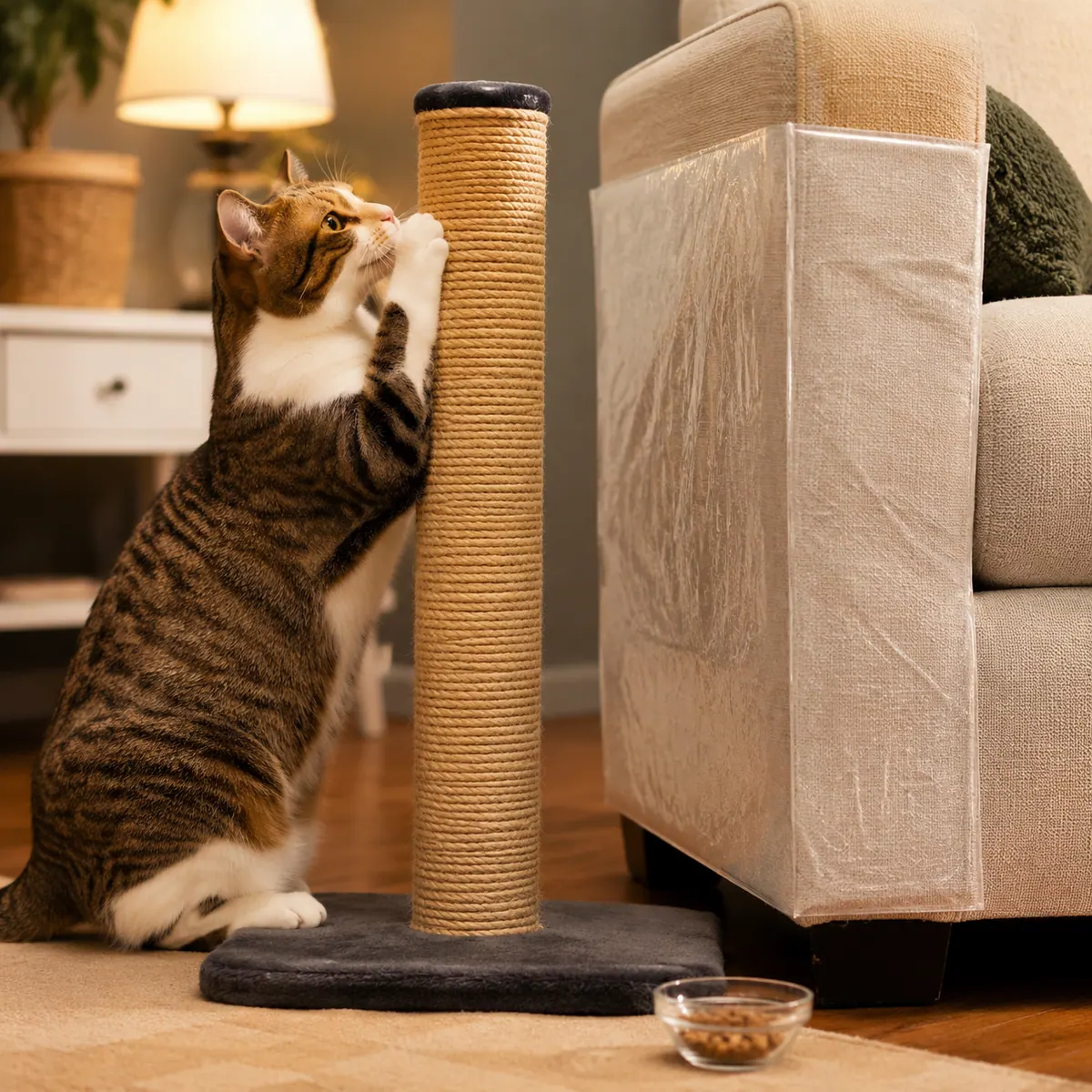
Scratching is normal. The target is the problem, not the behavior. Put sturdy scratching posts near the furniture the cat already uses, near sleeping areas, and near main paths. Try sisal, cardboard, wood, and carpet textures. Some cats want vertical posts. Others want flat or angled scratchers. Reward any use with food, praise, or play.
Protect furniture while the new habit forms. Use washable covers, double-sided tape made for furniture, or temporary barriers. Trim nails regularly. Do not declaw as a routine solution. Redirecting scratching protects the cat's need to stretch, mark, and maintain claws while protecting the home.
Biting and rough play
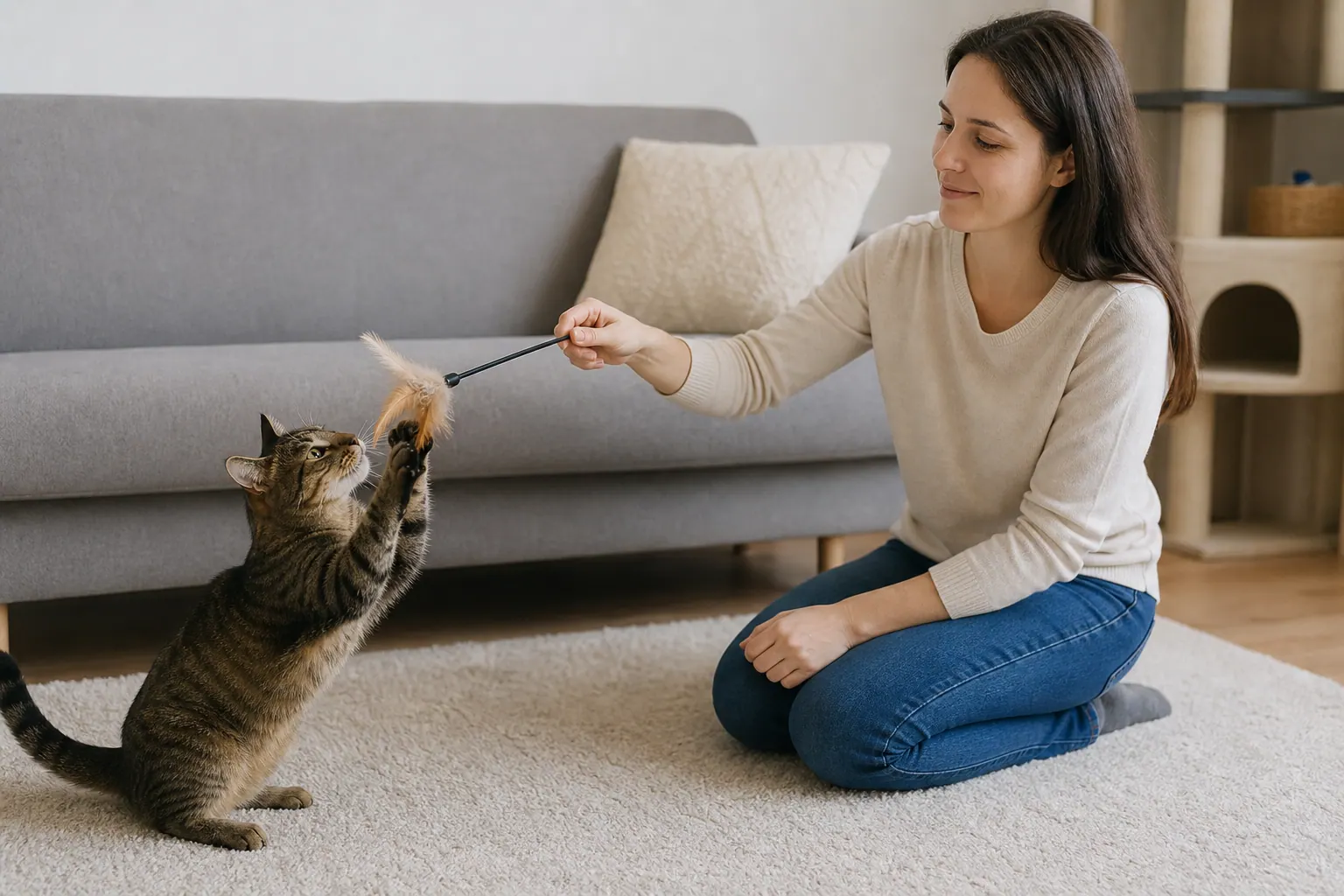
Hands should not be toys. If a cat bites during play, freeze, remove attention, and offer a wand toy after a pause. Use toys that keep teeth and claws away from skin. End play with a small food reward to complete the hunt sequence. Short daily sessions often reduce ambushes and ankle attacks.
Petting bites need a different plan. Watch for tail thrashing, skin twitching, head turning, ear changes, or sudden stillness. Stop petting before the bite. Many cats prefer cheek and head rubs over long strokes down the back. Consent-based handling lowers conflict.
Counters, chewing, and night noise
Counter surfing usually continues when the counter pays. Put food away, clean crumbs, secure trash, and offer a legal high place nearby. Reward the cat for using a perch or stool. If the cat jumps up for attention, avoid picking it up, talking, or feeding from the counter. Guide attention to the allowed station.
Chewing may involve boredom, texture seeking, teething in kittens, or medical concerns. Hide cords, remove rubber bands and strings, offer safe chew toys, and increase play. If chewing is new, intense, or paired with appetite changes, ask a veterinarian.
Night noise improves when daytime needs are met. Add evening play, food puzzles, and a final small meal. Avoid feeding during loud demands, or the cat may learn that noise opens the kitchen. If vocalizing is new, check health, hearing, pain, thyroid disease, and cognitive changes.
Build a replacement habit
To stop cat bad habits, name the replacement. Scratch this post. Bite this toy. Sit on this perch. Use this puzzle feeder. Reward the exact behavior you want. Keep sessions short and repeat daily. The Spruce Pets notes that behavior problems can come from instinct, stress, pain, or medical conditions. That is why good training starts with health, environment, and patience. When the home pays better for good choices, many bad habits fade without fear.
Make the home do part of the training. Put scratchers where the cat already scratches, not only where people wish they looked best. Keep food off counters before practice starts. Close doors to rooms with unsafe cords during chewing phases. Use puzzle feeders and scheduled play to meet hunting needs before the cat invents its own game.
If a habit appears suddenly, check health before calling it misbehavior. Pain can make handling look like aggression. Nausea can change food-seeking. Anxiety can increase vocalizing. Training works best when the cat feels well, the environment offers legal choices, and every person in the home responds the same way.
Track what pays the habit. If counter jumping brings food scraps, remove scraps. If meowing brings a midnight meal, shift calories into an evening puzzle feeder. If scratching brings attention, reward the post before furniture contact begins.
Owners should also reward quiet moments. If the cat rests on the allowed perch, uses a toy, or walks past the counter, mark that choice with food or praise. Training is stronger when good behavior gets noticed before trouble starts. The cat learns which actions make the home rewarding.
Sources: AAHA/AAFP https://www.aaha.org/resources/2021-aaha-aafp-feline-life-stage-guidelines/ The Spruce Pets https://www.thesprucepets.com/cat-behavior-problems-554077